
I live nearly 800 miles from the International Quilt Museum, so I have only made it there once. I was thrilled to hear about an exhibit of their quilts at the Taft Art Museum in Cincinnati, focusing on Indigo and the Art of Quiltmaking.
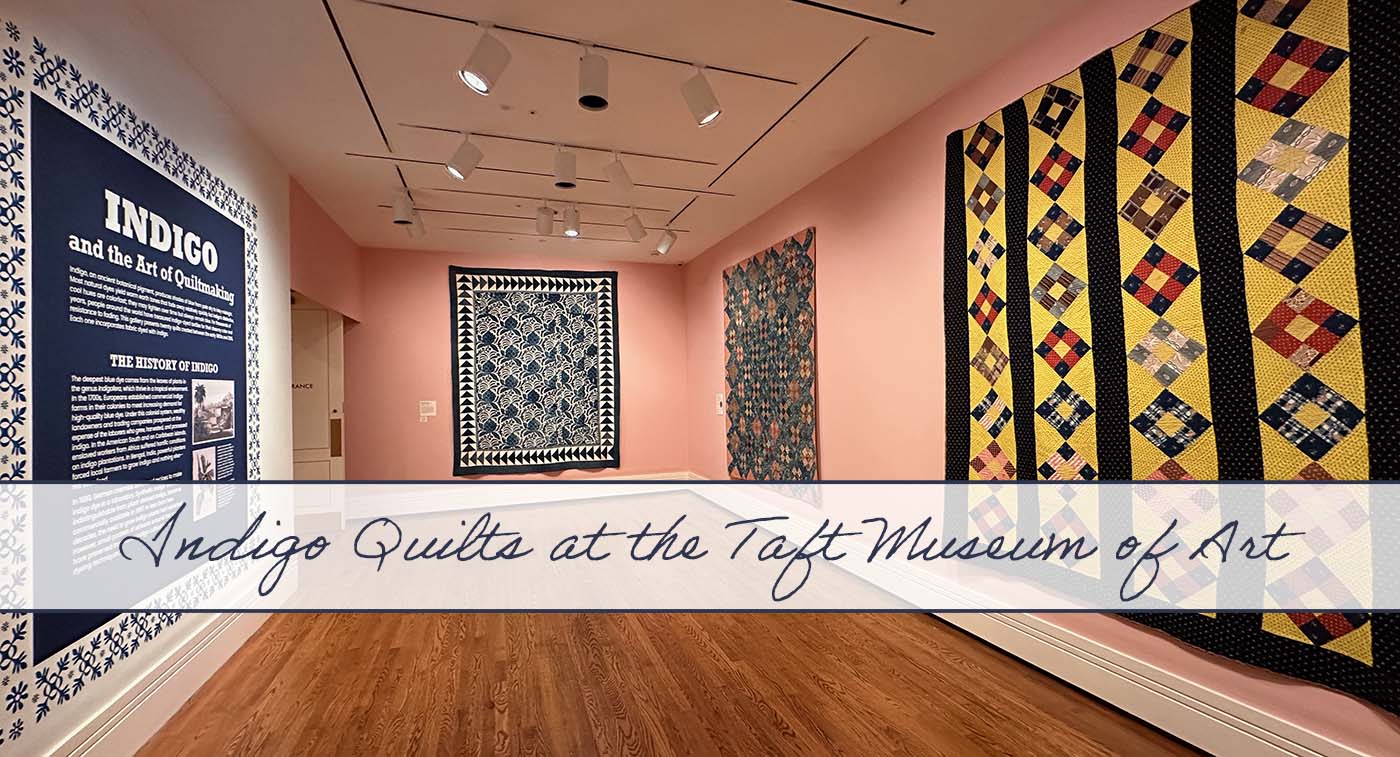
The exhibit featured quilts and other textiles that incorporated indigo dye into their designs. These quilts came from different eras and employed wildly different aesthetics, making this small exhibit dynamic and engaging.
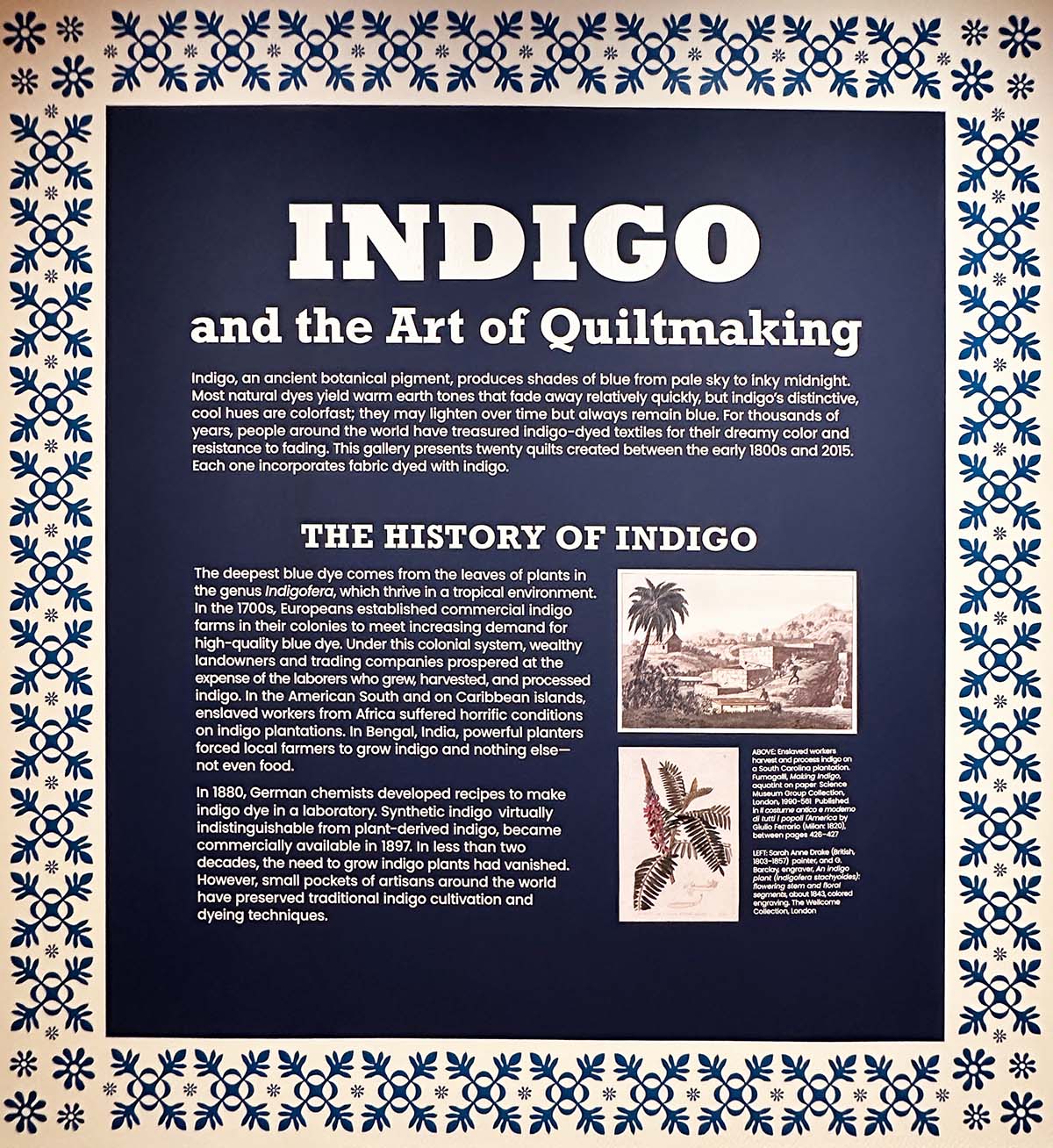
Today, I’m sharing a few of my favorite quilts from the exhibition and why I was drawn to them.
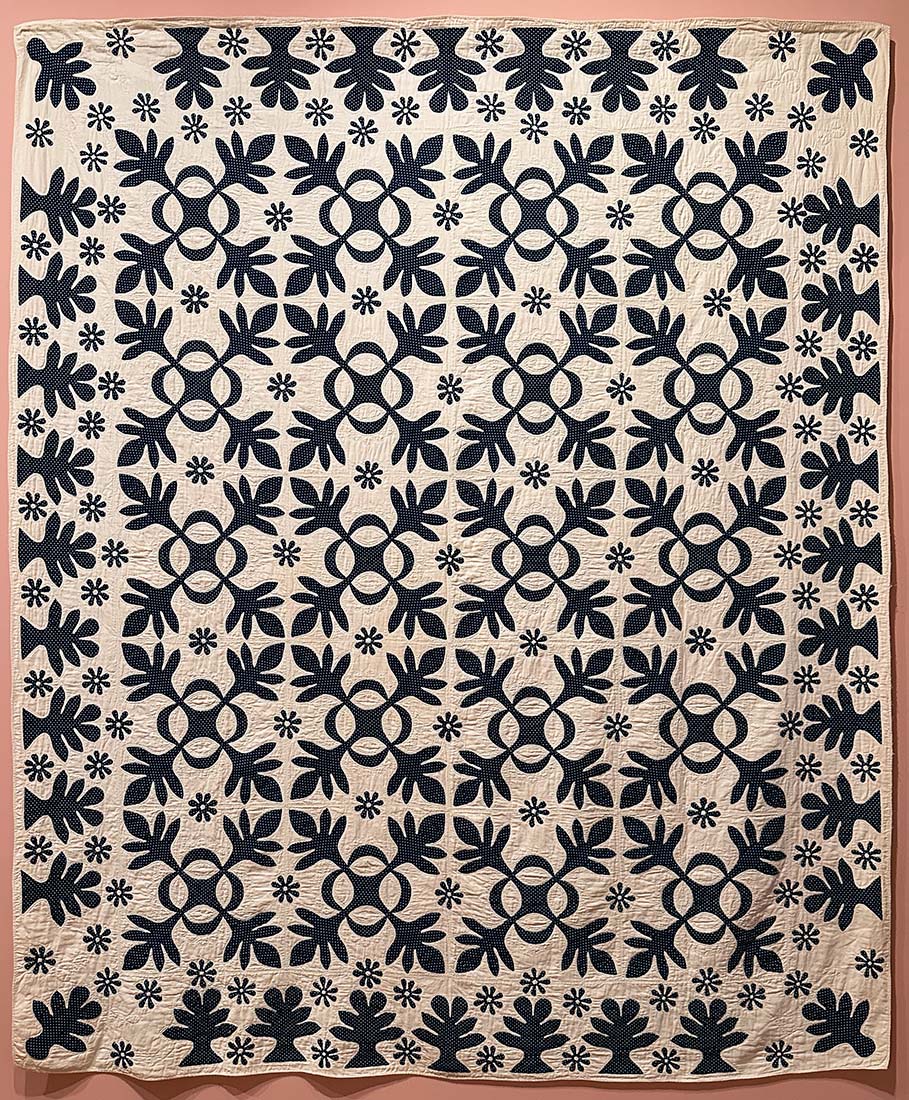
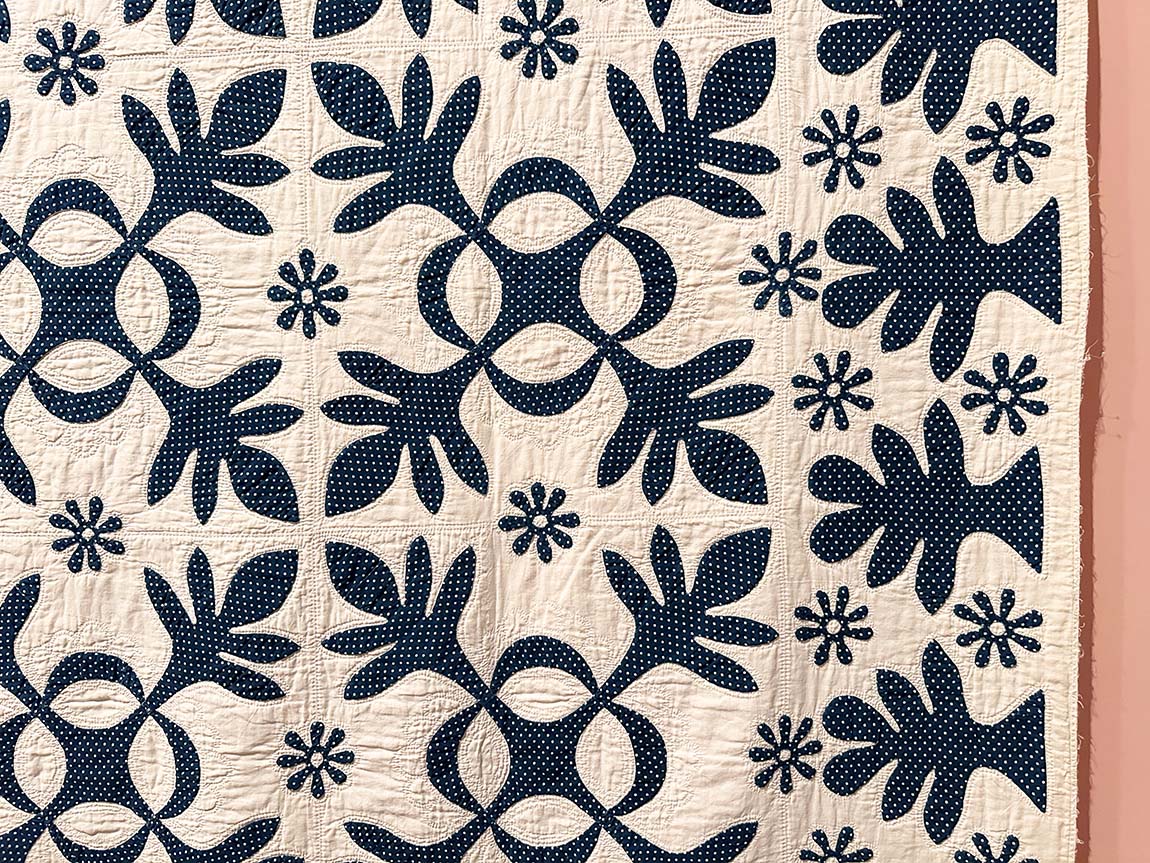
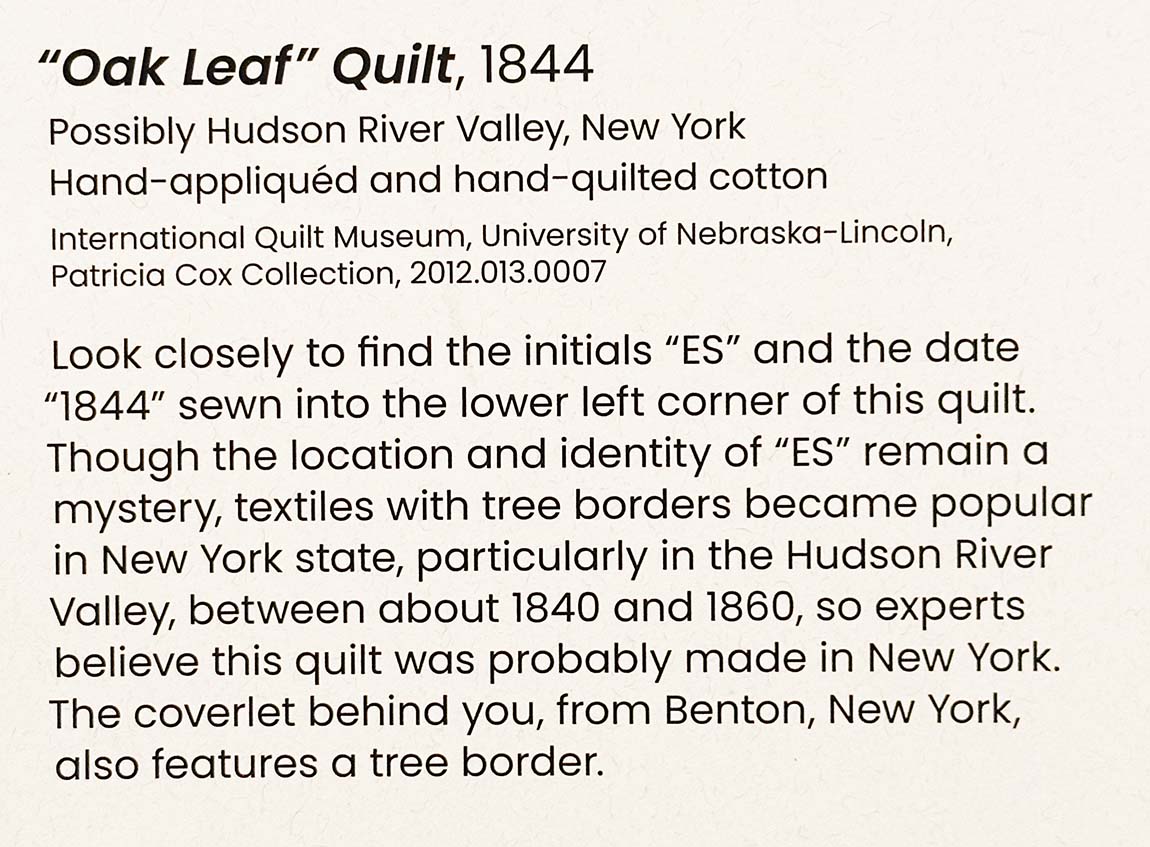
“Oak Leaf” Quilt
The Oak Leaf Quilt was my favorite among the historic quilts. I love doing (and seeing) detailed needle-turn appliqué, and this piece balances the visually heavy leaf and tree motifs with the visually lighter circular motifs dancing throughout the quilt, adding movement to the overall formal design.
Whole Cloth Quilt
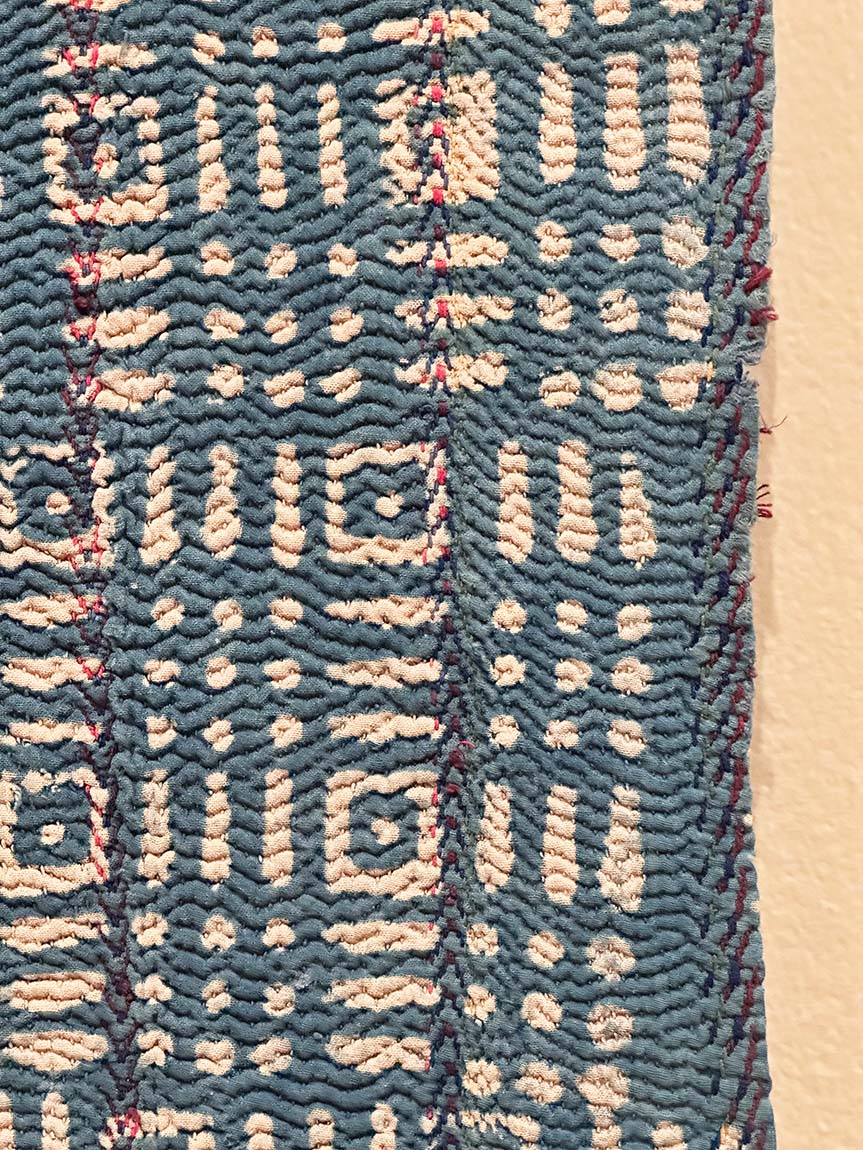
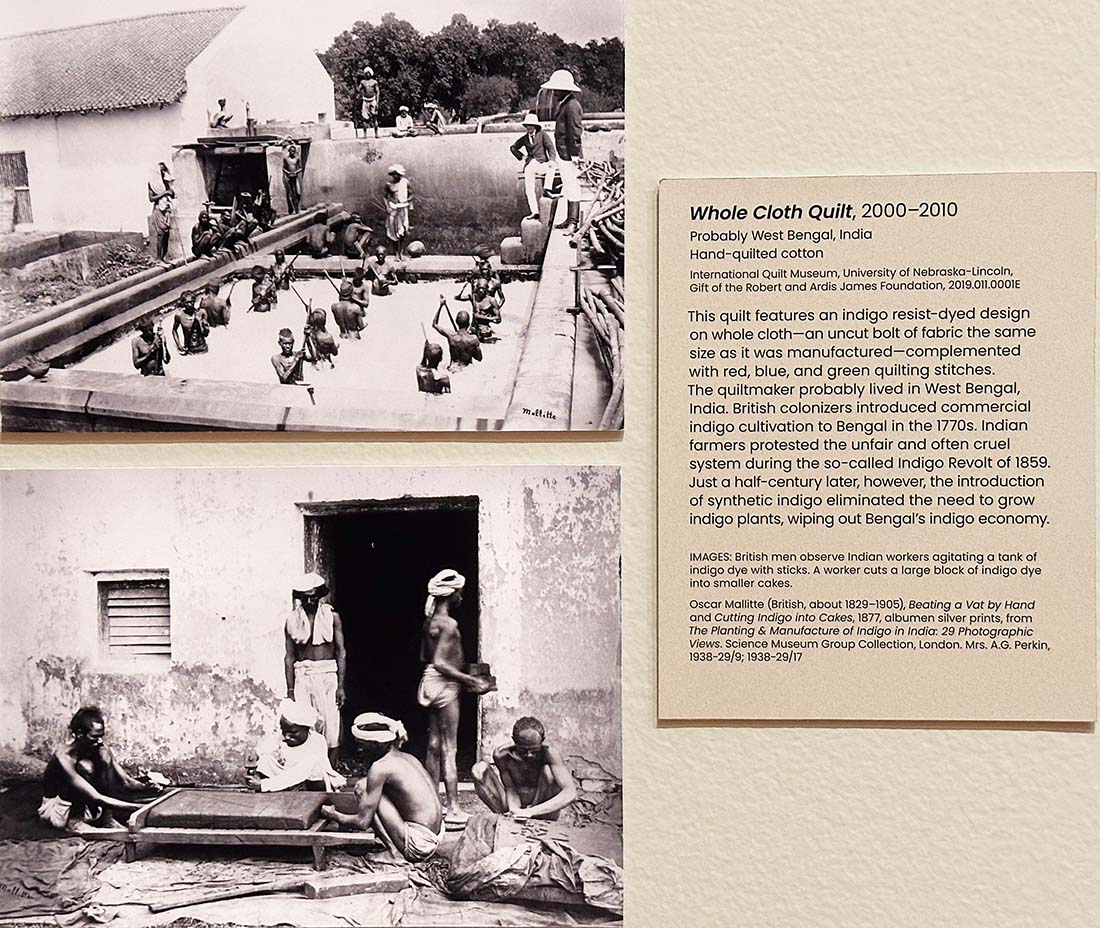
The dyed indigo motif of this whole-cloth quilt caught my eye first, but what really held my attention was the use of red, green, and blue quilting stitches. The heavy thread in bright colors makes a simple two-color design lively, especially in areas with varying stitch density.

“Feathered Star” Quilt
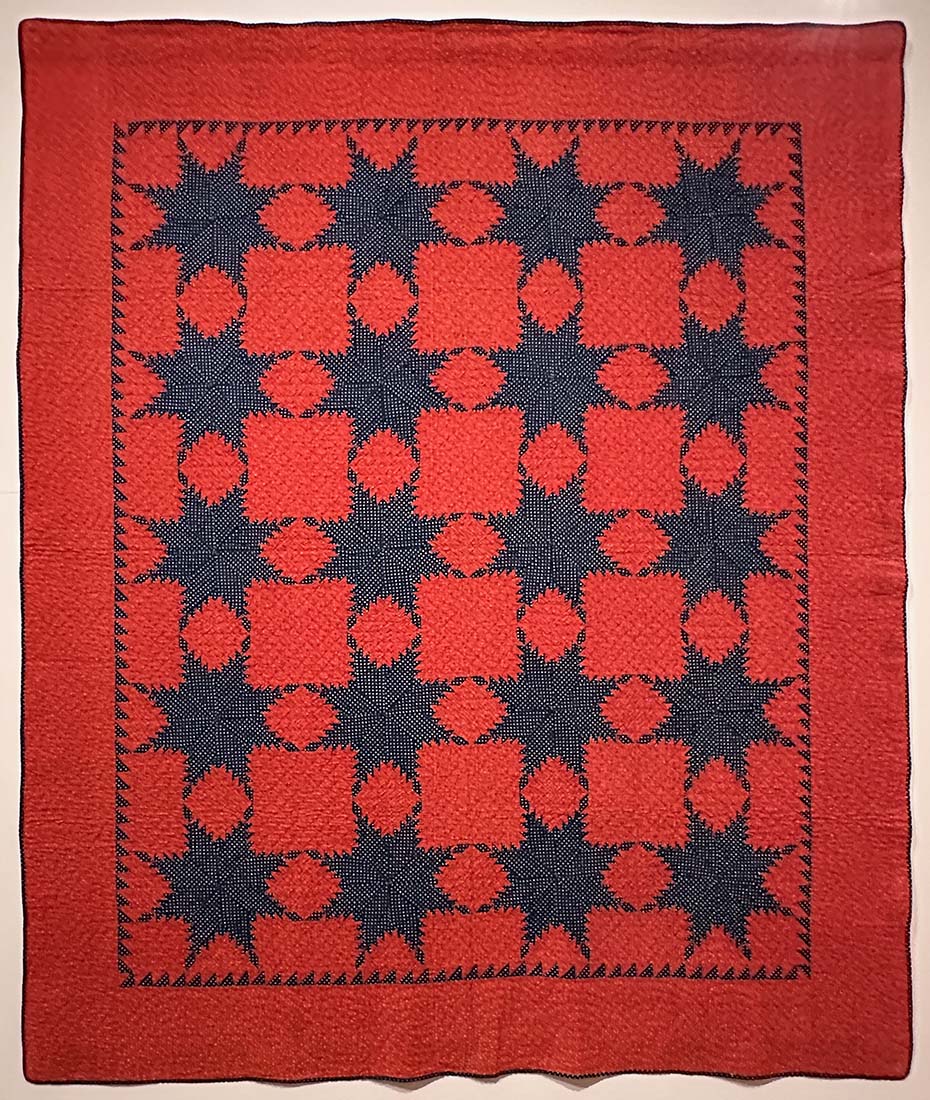
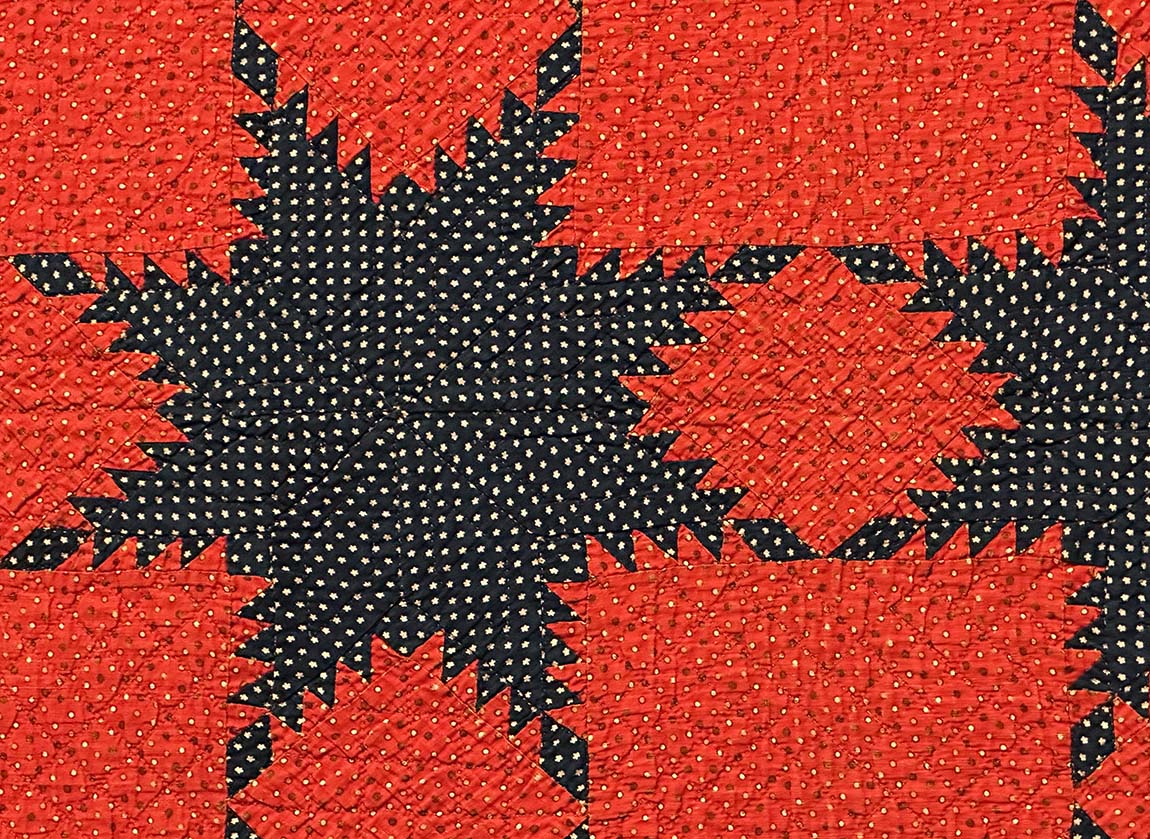
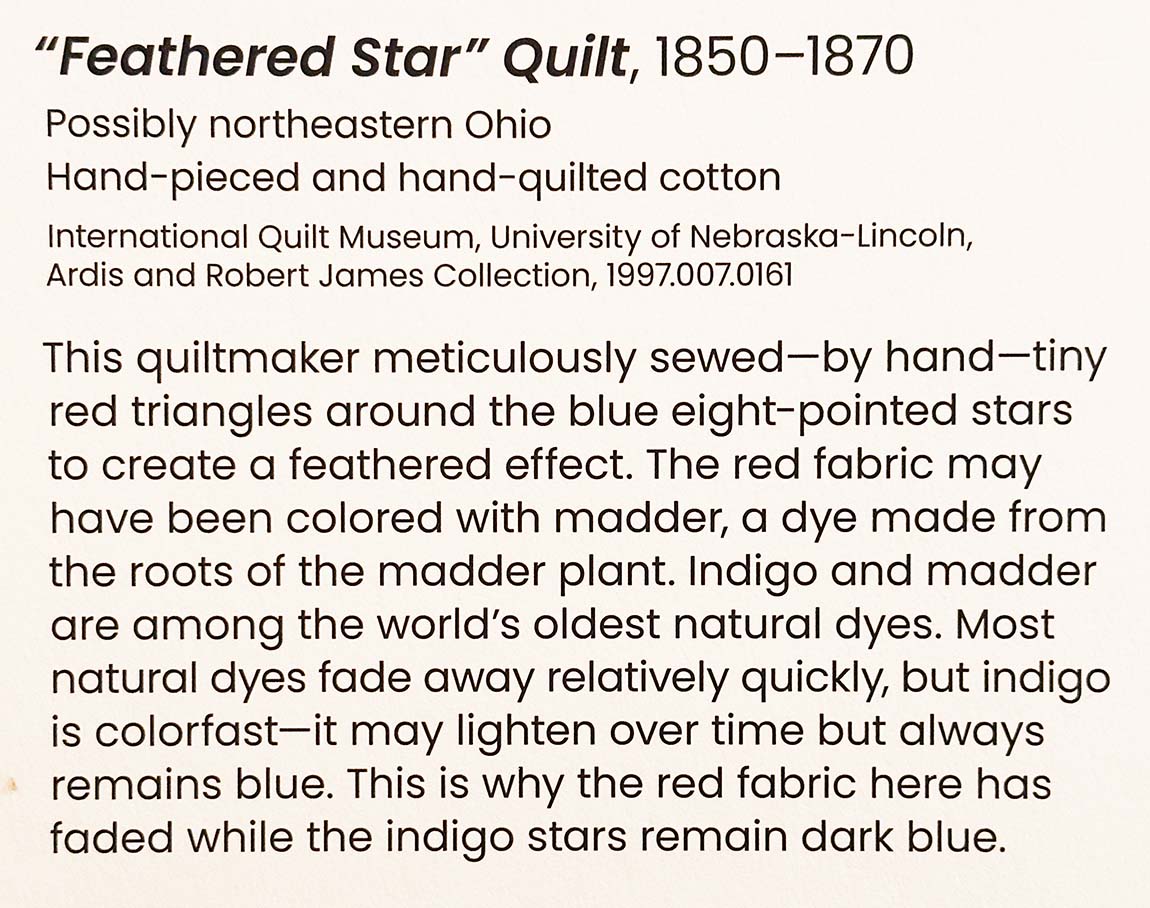
The tiny triangle piecing on a feathered star is always impressive, but this quilt was over the top even by traditional standards. This entire quilt was hand pieced, and I can only imagine the challenges the maker faced while piecing together all of these tiny pieces with bias edges.
Transition
Made by Nyx (Marie) Lyman
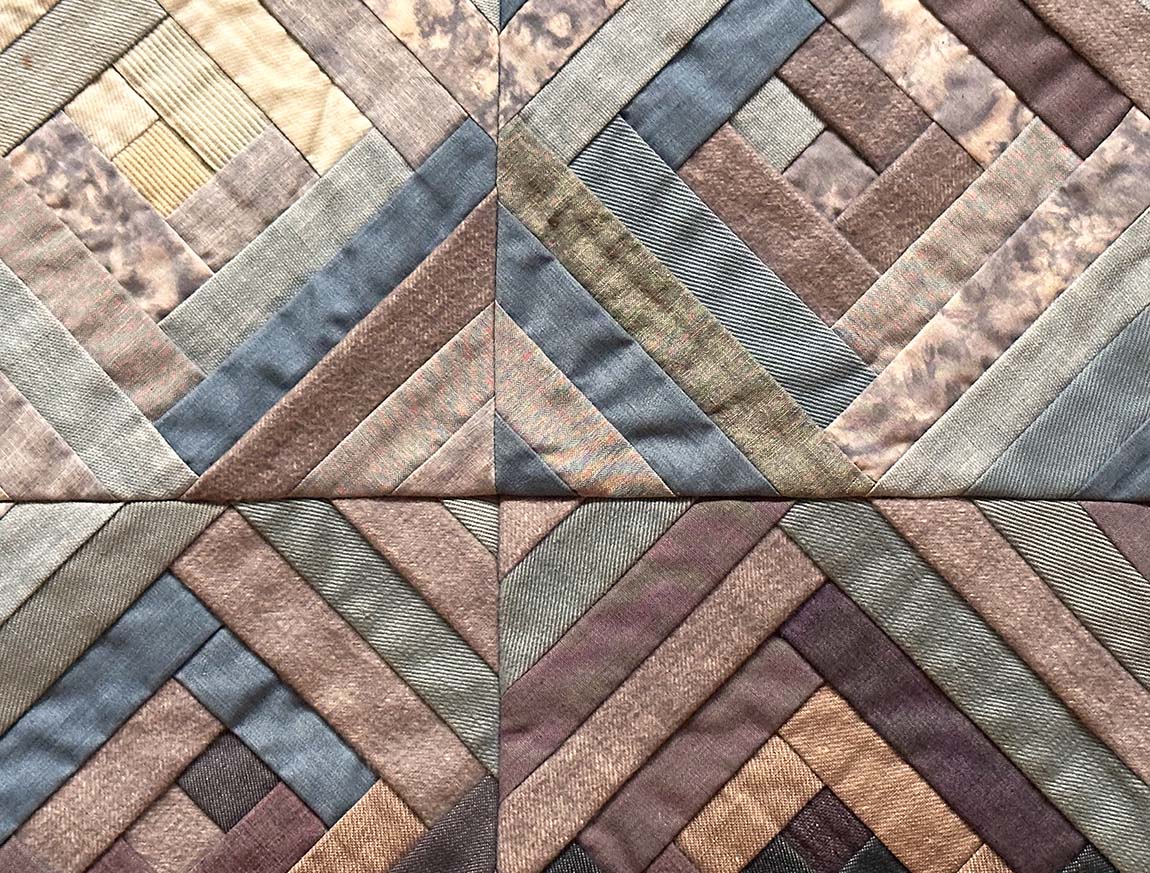
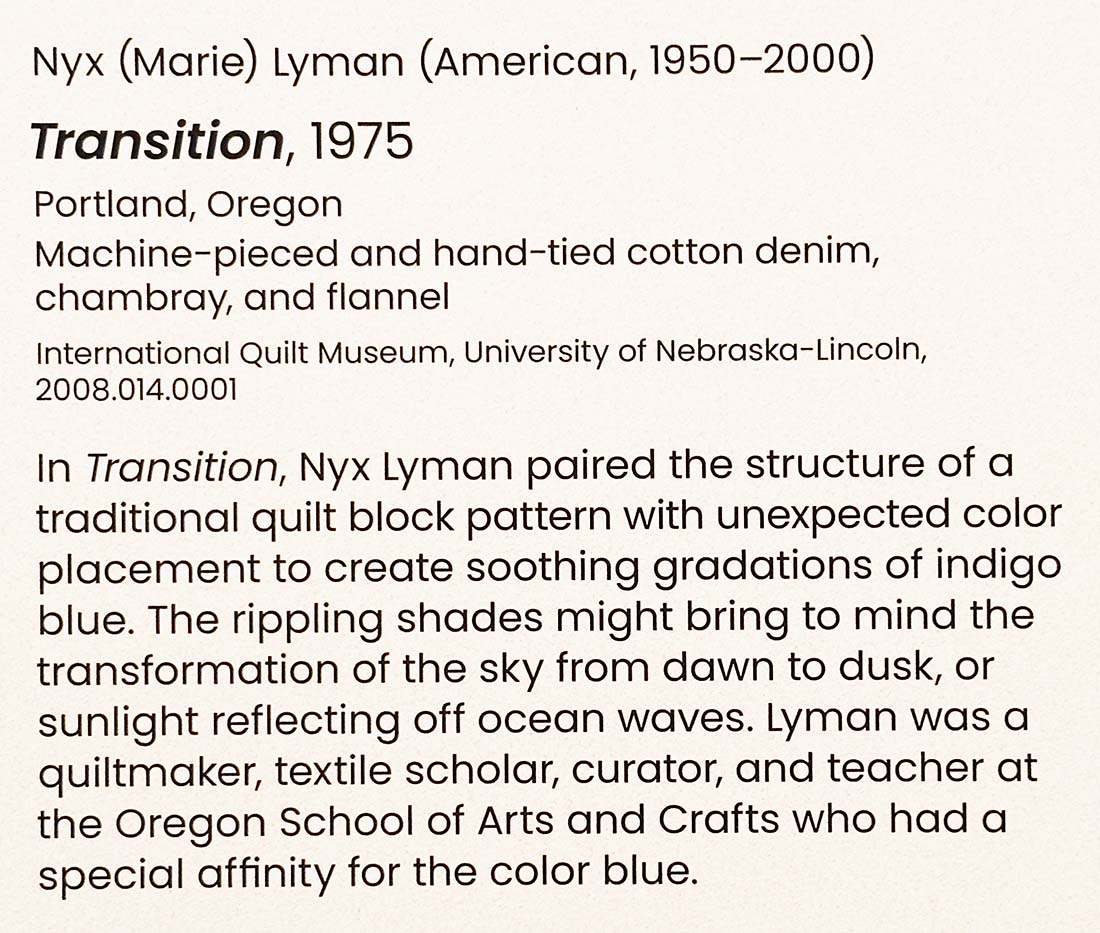
Transition uses a variation on the familiar log cabin shape by constructing the block on-point, creating a similar secondary motif where the blocks join. The offset gradient, created with subtle colors and an unexpected material palette, made this quilt stand out.

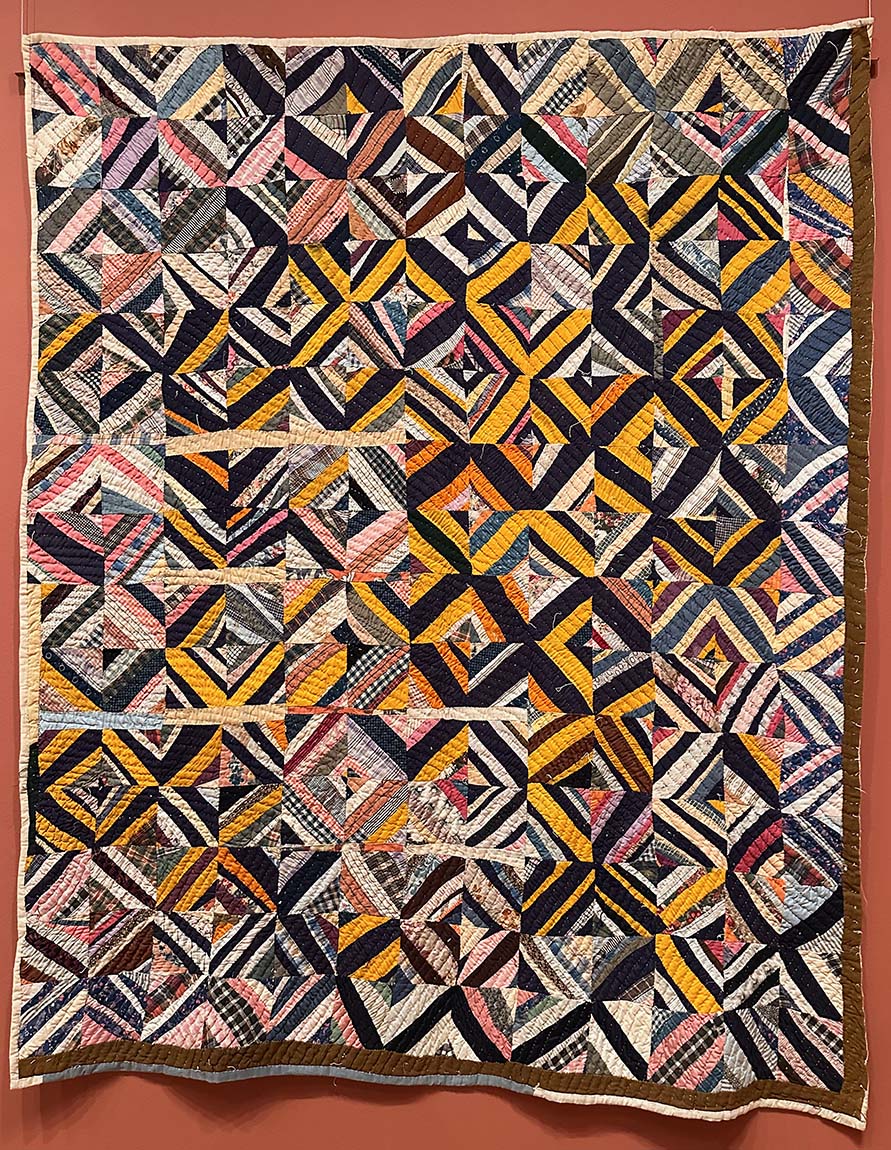
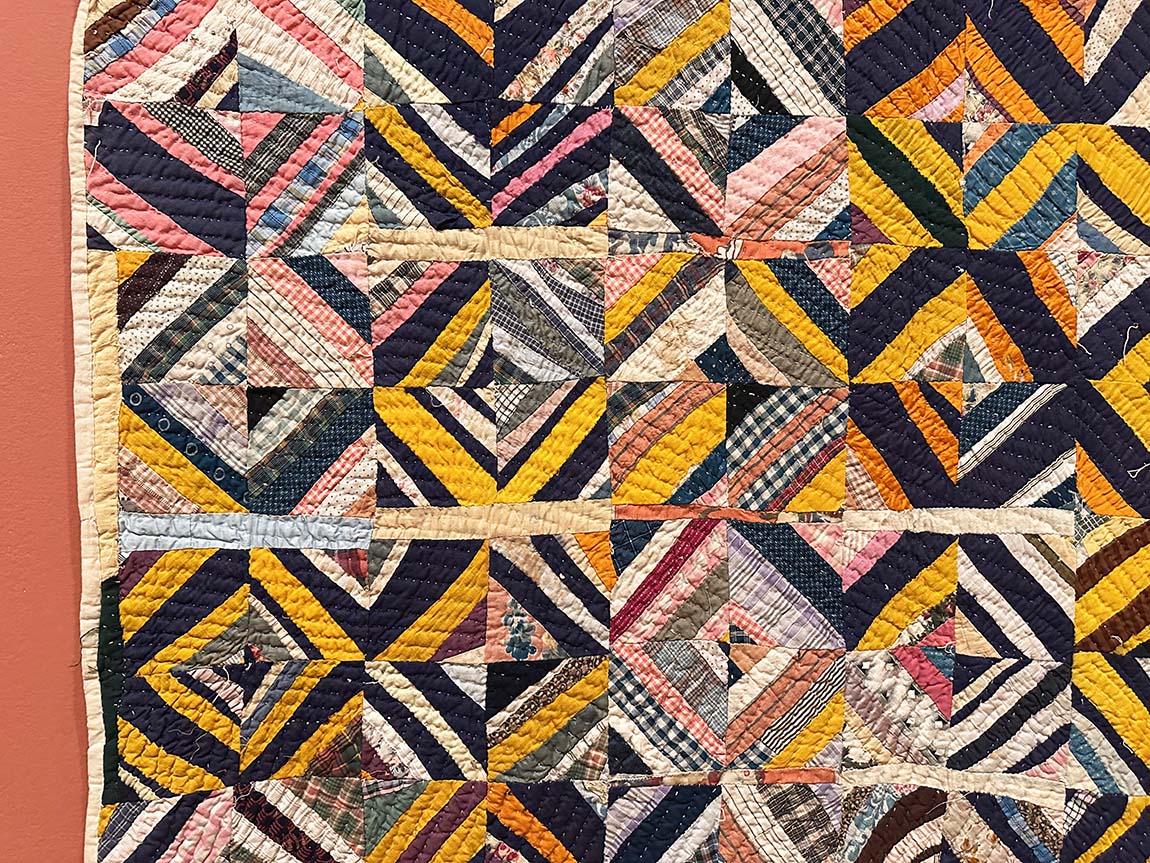
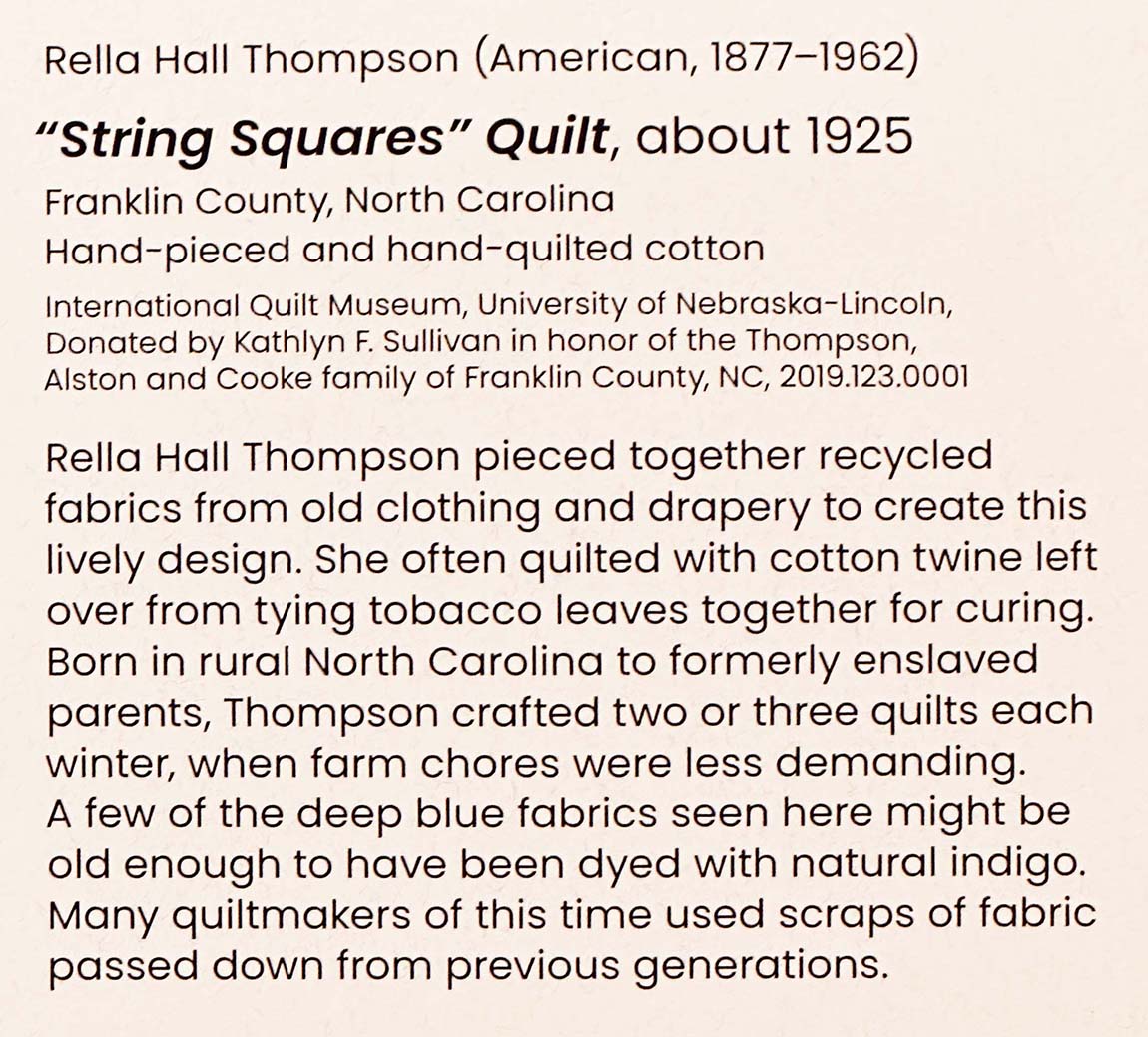
“String Squares” Quilt
Made by Rella Hall Thompson
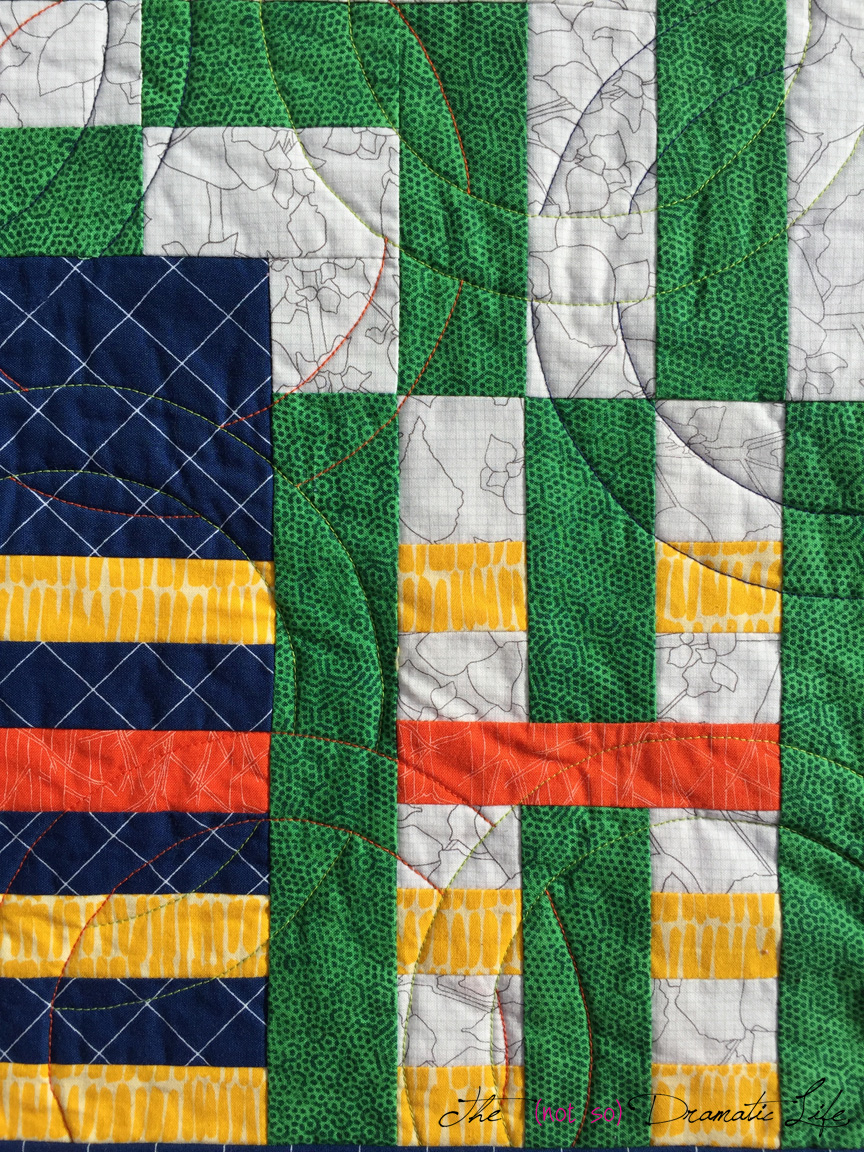
Typically, I’m not a huge fan of yellow, but it is perfect in this design- it caught my eye and drew me in from across the room. The motifs in this design are similar to those in the quilt Transition I shared above, but the improvisational piecing creates movement in a different way, developing an almost liquid effect across the blocks. Also, notice how the intermittent horizontal piecing shifts the linear flow of the composition.
“Nine Patch” Quilt
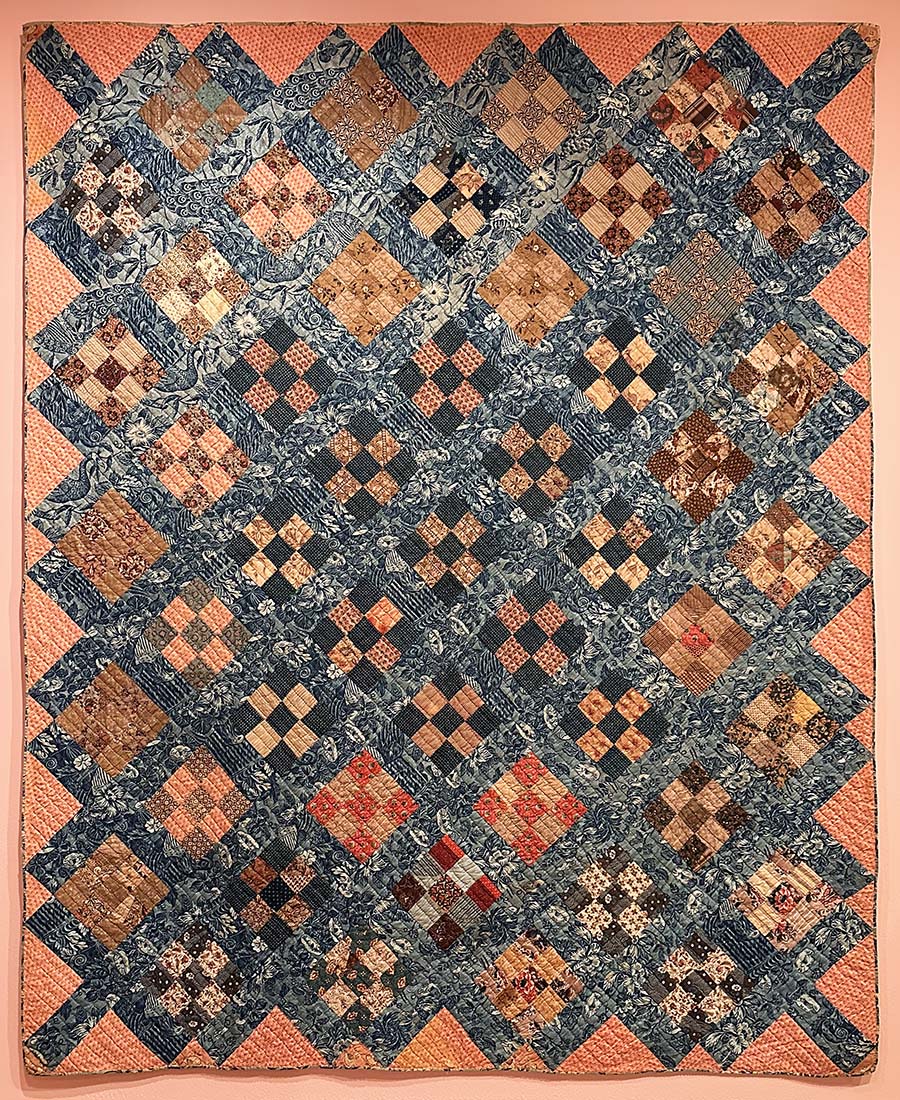
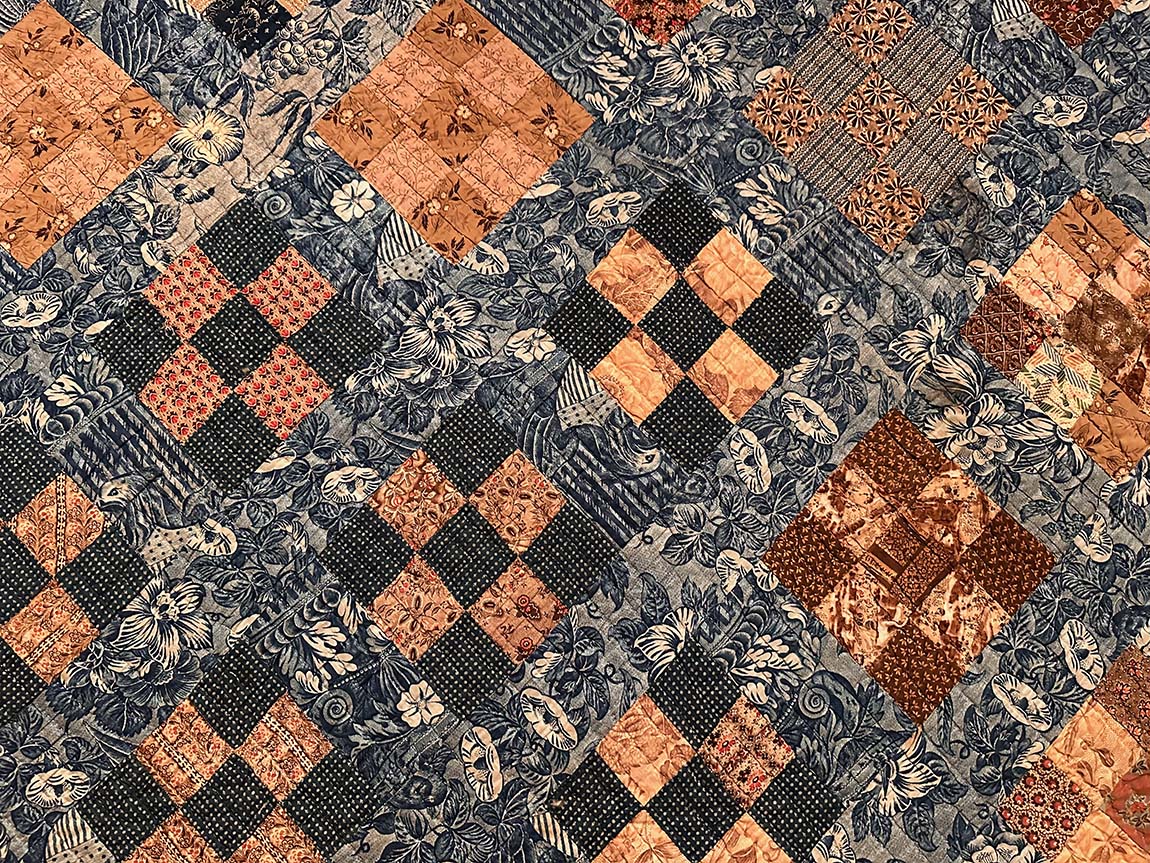
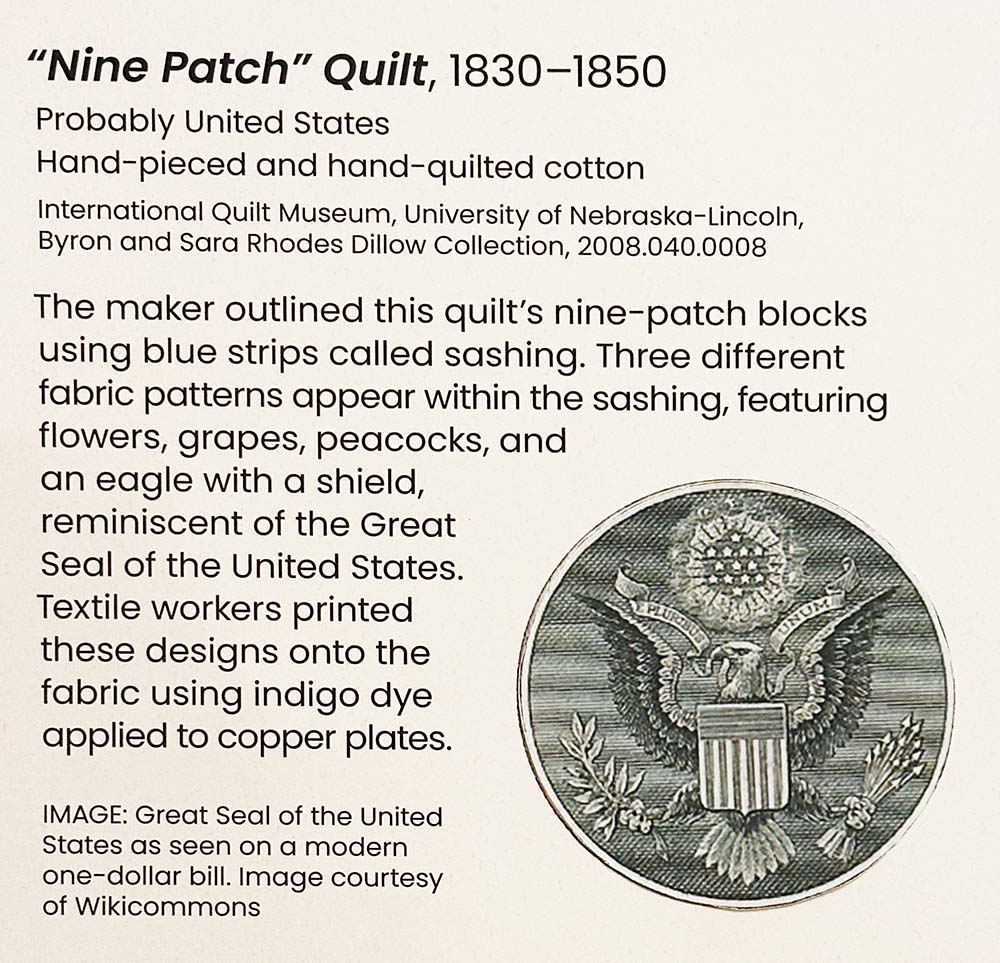
This on-point nine patch design uses a bold print in an unexpected way. While we may expect to see a large print cut to feature the printed motif, this design uses it as sashing, breaking it up in a way that creates a sense of swirling movement. The blocks float in a sea of print, with the composition anchored by the half blocks framing the quilt, making you question which parts of the quilt comprise the positive and negative space.
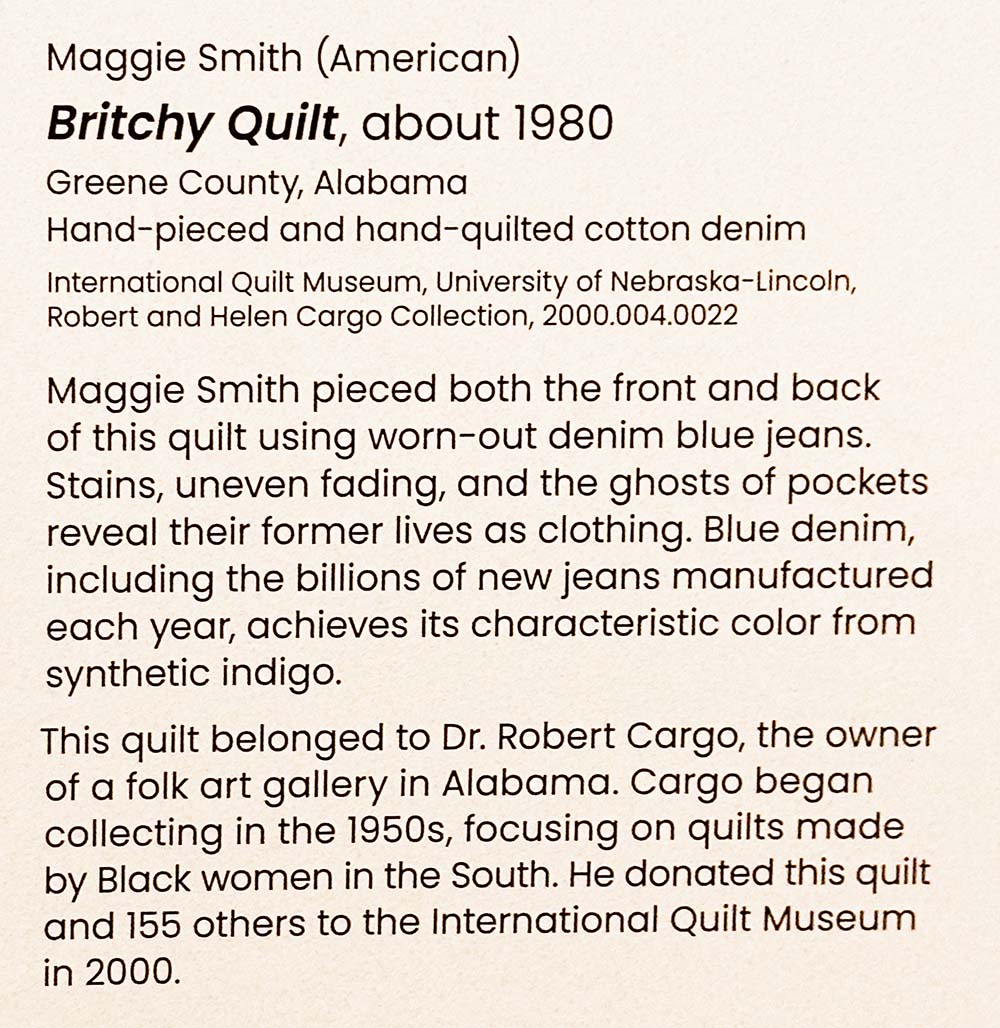
Britchy Quilt
Made by Maggie Smith
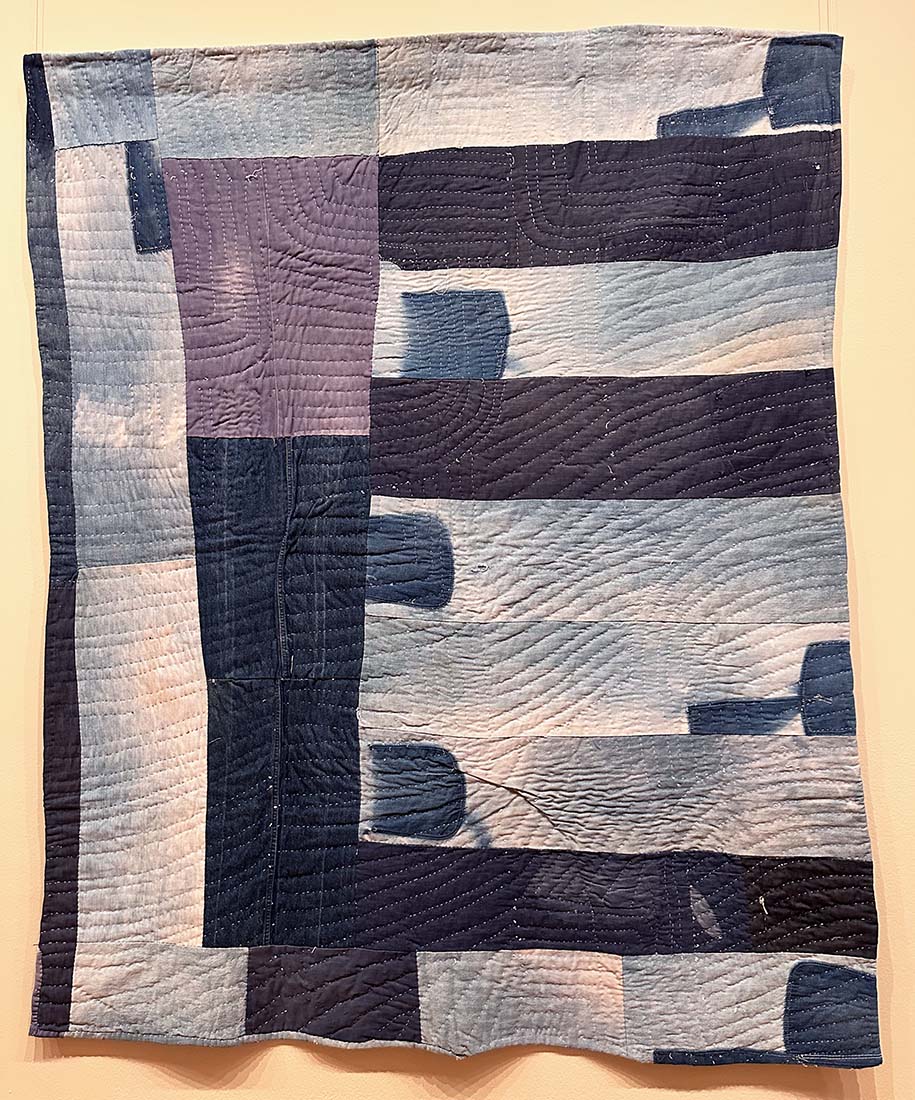
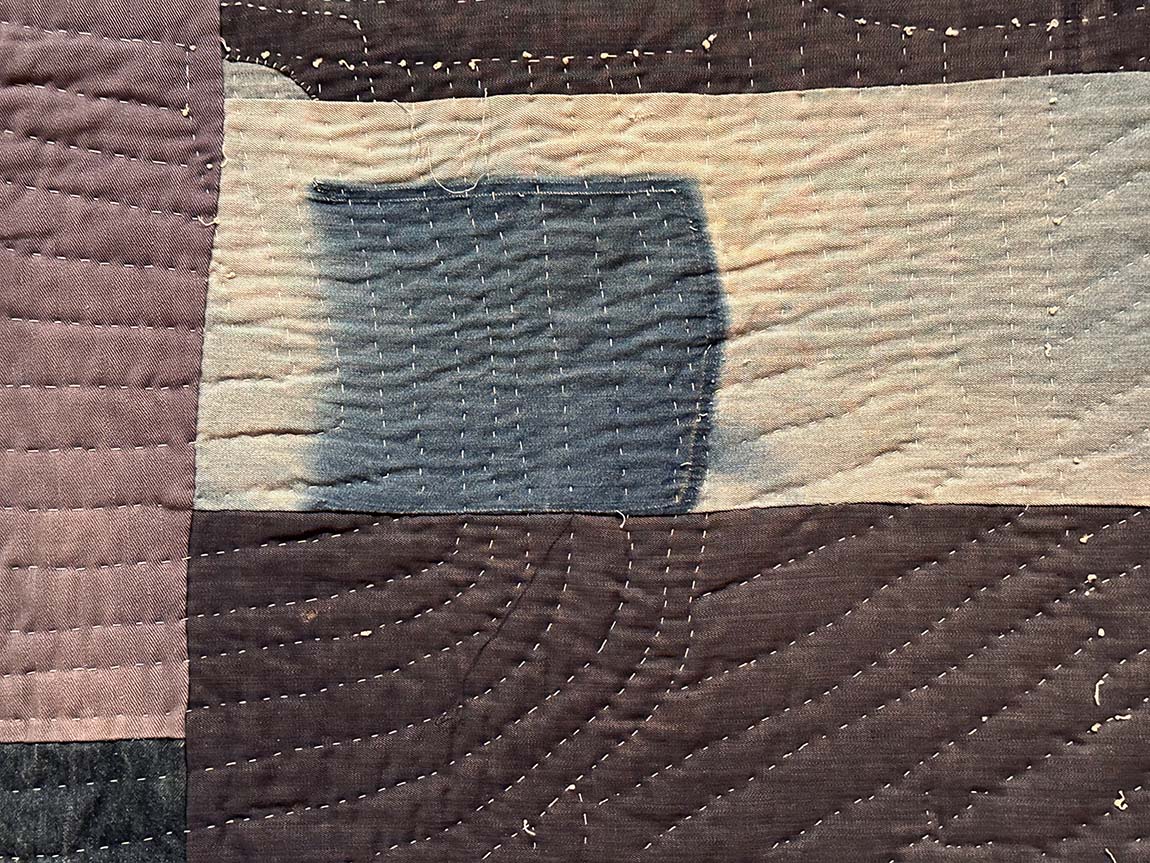
I saved my favorite quilt for last! When I first saw Britchy Quilt, I thought all the color shifts were pieced, but as I approached the piece, I realized the pocket shapes were created over years of wear on the surrounding surfaces, while pockets protected the base fabric. Particularly in an idigo exhibit, this quilt captures the effects of time, wear, and exposure on the textiles that surround us. The large stitch hand quilting adds curves and softness to the generally graphic piecing.
These seven quilts were my favorites in the exhibit. What did you think? Do you prefer the quilts made more recently, or the most historic examples of indigo? The best part of this type of exhibit is that we have the opportunity to see how wildly different quilting techniques and designs can share common elements in their construction.


No Comments