
Fabric + Thread = Quilt
Ok, there is more to it than that, but these two key components are the most visible elements in the quilt design process. For most designs, the fabric is the most prominent element, but the quilting thread selections always play a role in the finished aesthetic.
Occasionally, a design calls for thread to play an equal or greater role than the fabric, and the project I am currently working on is one of these times.
To help ensure a successful design, I made quilting test samples on two different fabrics to see how a variety of thread colors interact with the base material. You too can use this simple process to determine which quilting threads will work best with your design.
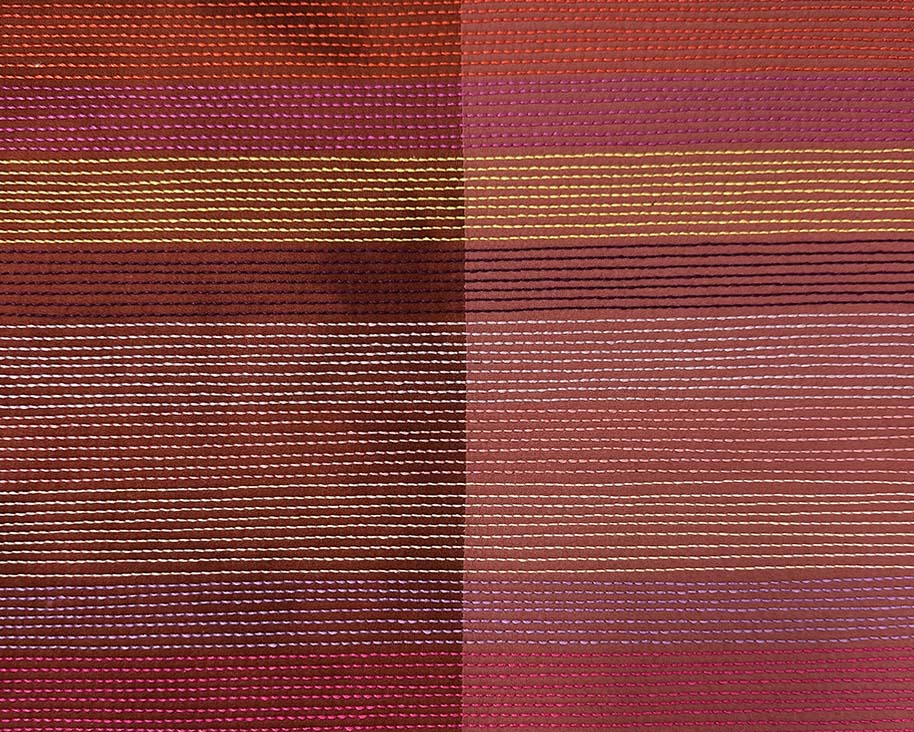
Why Make a Quilting Sample?
I had two goals for this quilting test sample:
- Select a primary fabric for my minimalist two-fabric quilt.
- Determine which thread colors best infuse color into the background material.
If you have been around here much, you may know that brown is my least favorite fabric color to work with in my quilts. However, I had some success with the Mocha Mousse Mountain mini-quilt I made for this year’s Pantone Quilt Challenge, and I wanted to further explore a modern use of brown fabric in my newest design. I liked how the warm brown of the challenge fabric melds with the colors near it, making its exact color appear to shift. The new design incorporates just two colors —brown and blue-grey — to create an abstraction of a desert landscape. (I’ll share the full design once the quilt is finished!)
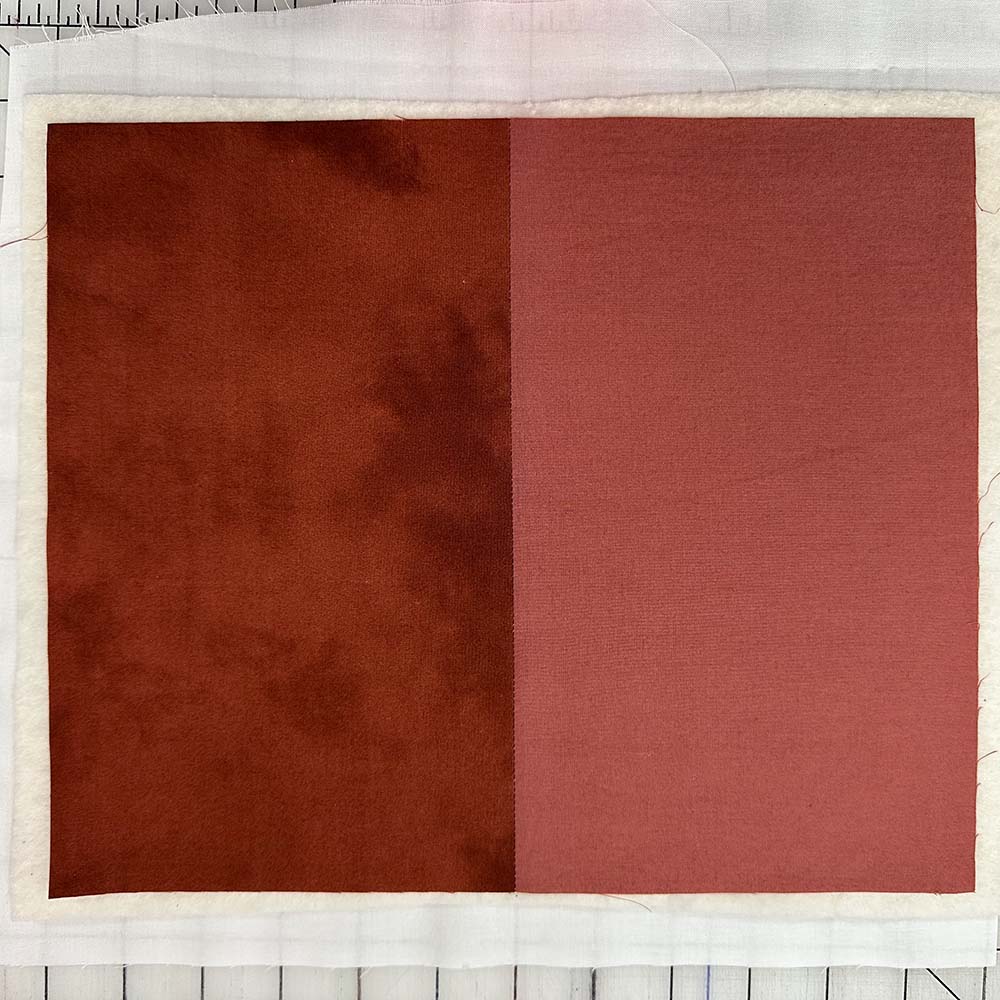
I recently decided to make this quilt, hoping to finish it in time for entry into the QuiltCon contest. With the deadline approaching, I needed to select fabric that I could obtain locally. I ended up looking at two options: a dusty brown solid and a darker mottled brown print. To help make the final fabric choice, I made a quilting sample to compare how each fabric looks with the potential quilting colors.
Making the Sample
I had two fabrics to compare for the quilt, so I made a very simple mini quilt top with equal amounts of each held together with a single seam. If you have more fabrics in your design, you could use strips of each fabric to test thread color. For this test, the quilt top was about ten inches square.
For this design, I am using matchstick quilting using a heavy 12-weight thread in a wide range of colors. The quilting density makes a big difference in how the color is perceived, so I decided to do an inch of matchstick quilting in each color to see the interactions between the fabrics and the thread. I used one-inch-wide masking tape, my favorite marking method, to space the quilting sections.
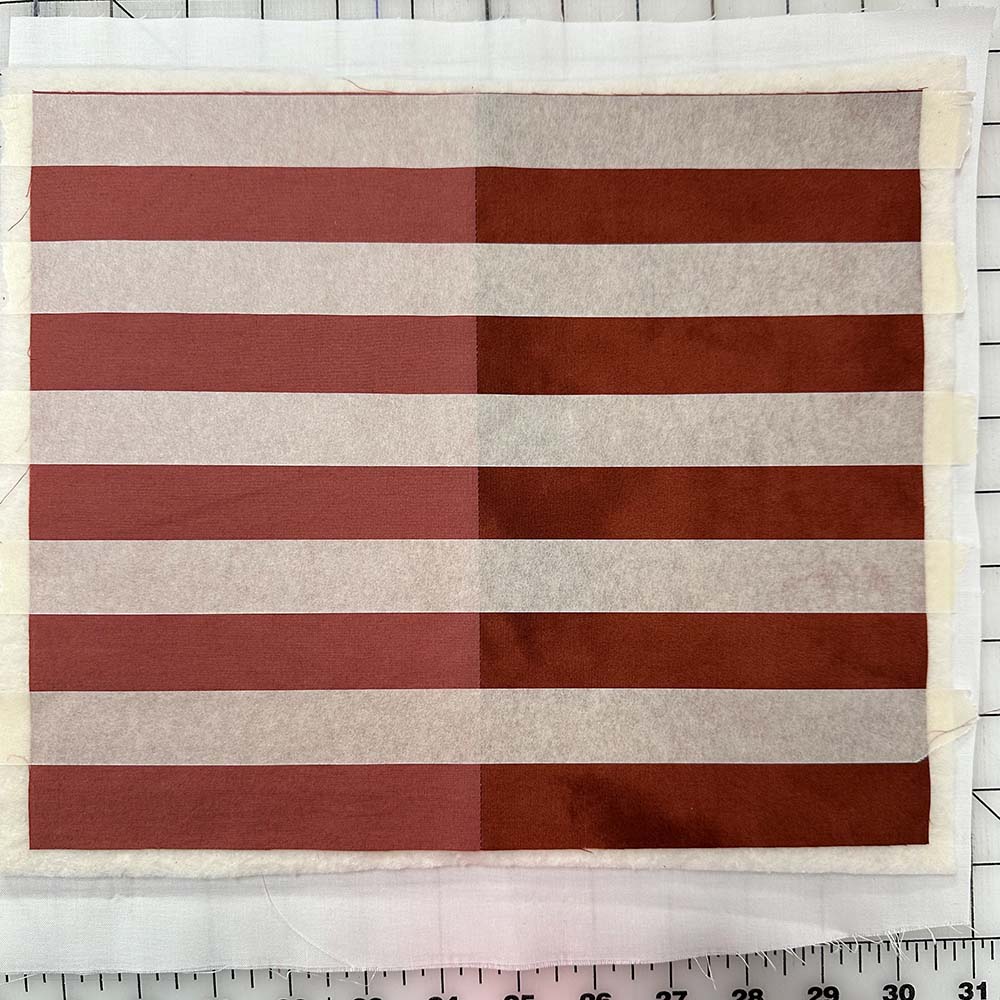
I did the matchstick quilting using the walking foot on my BERNINA 770QE PLUS. Since this was a sample, I used a neutral-colored bobbin for all stitching, regardless of the top thread color. For the final quilt, I match the top and bobbin thread: 12-weight on top and either 40- or 50-weight in the bobbin.
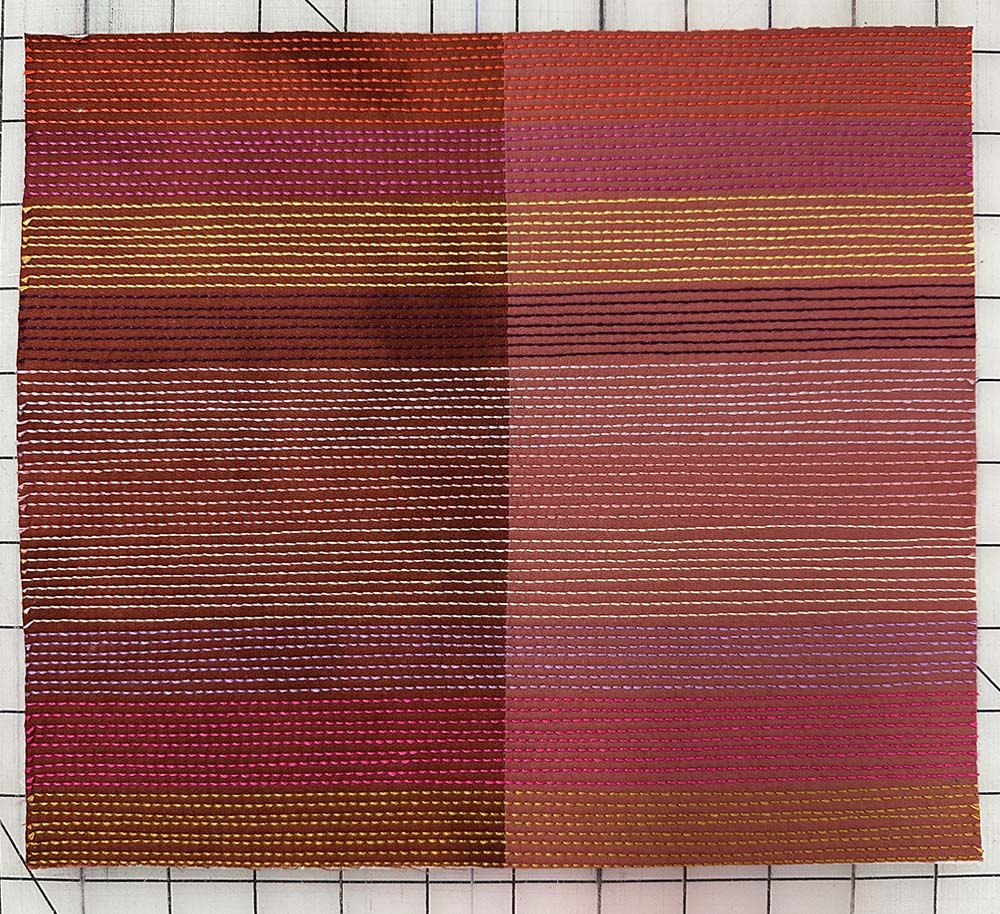
What I Learned From the Sample
After quilting the sample, I compared how the threads looked on each fabric and ultimately decided to go with the darker, richer-colored fabric with some mottling for the final project.
After quilting the sample, I compared how the threads looked on each fabric and ultimately decided to go with the darker, richer-colored fabric with some mottling for the final project.
I’m well on my way with the final quilt, and I can’t wait to share the finished version soon!

2 Comments
Shanda Siekert-Logue
October 24, 2025 at 10:49 amThe mottled fabric background is definitely richer and more interesting!
Thanks for your tips regarding selection of quilting thread…and background fabric!
What Happens When You Add Bright Thread to Dull Fabric? The Results Are Incredible + A TGIFF Link Up! – The (not so) Dramatic Life
November 6, 2025 at 6:00 pm[…] Read more about testing fabric and thread […]