
QuiltCon 2026 is all wrapped up, and last Sunday I stood in line to pick up the quilts I had in the show. During pickup, you don’t just receive your quilts, but also a printed set of judges’ comments sealed in an envelope. I appreciate shows that provide comments because they let us know how our quilts are received by experts who weren’t privy to our creative decision-making processes.

QuiltCon has an entirely different panel of judges each year, so comment quality and even award decisions can vary wildly from year to year. Having a clear, consistent set of judging criteria can help, and in recent years, QuiltCon has been open about its criteria, even providing this list before the show.
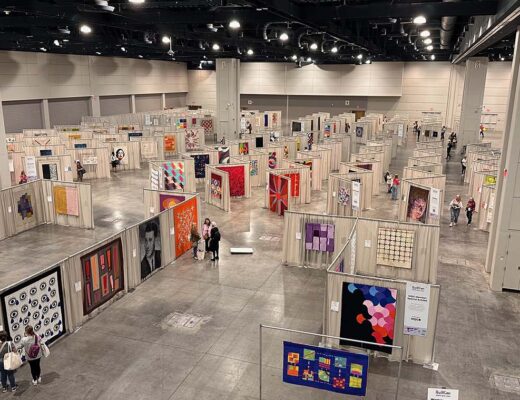
In a highly competitive juried show, every quilt you see is already a winner just to be displayed. This year, there were 2,041 entries, and only 470 quilts (23%) were accepted into the show. Keeping that in mind, would you like to see the winning quilts?
How are Quilts Judged?
Each show can determine how the quilts in its show are selected and judged. The following judging criteria are quoted directly from the QuiltCon Awards, Categories, and Judging Criteria page.
Judging Criteria
Each category is evaluated using the following criteria:
Design
- Elements of the modern aesthetic
- Visual impact
- Use of balance
- Use of color
- Use of contrast/value
- Fabric choices
- Innovation/Creativity
Workmanship
- Overall construction
- Piecing
- Binding or edge finishing
Quilting
- Execution
- Thread choice
- Complements the piecing/appliqué design
Additionally, some categories have criteria specific to them that judges look for. Those are listed below for each category. This year, I had a quilt in the Minimalism Category, but none of the other areas had specific criteria.
Appliqué
- Innovation/creativity
- Execution
Handwork
- Innovation/creativity
- Execution
Improvisation
- Innovation/creativity
- Execution
Minimalist Design
- Principles of minimalism
Modern Traditionalism
- Innovation and reinterpretation
Use of Negative Space
- Innovation/creativity
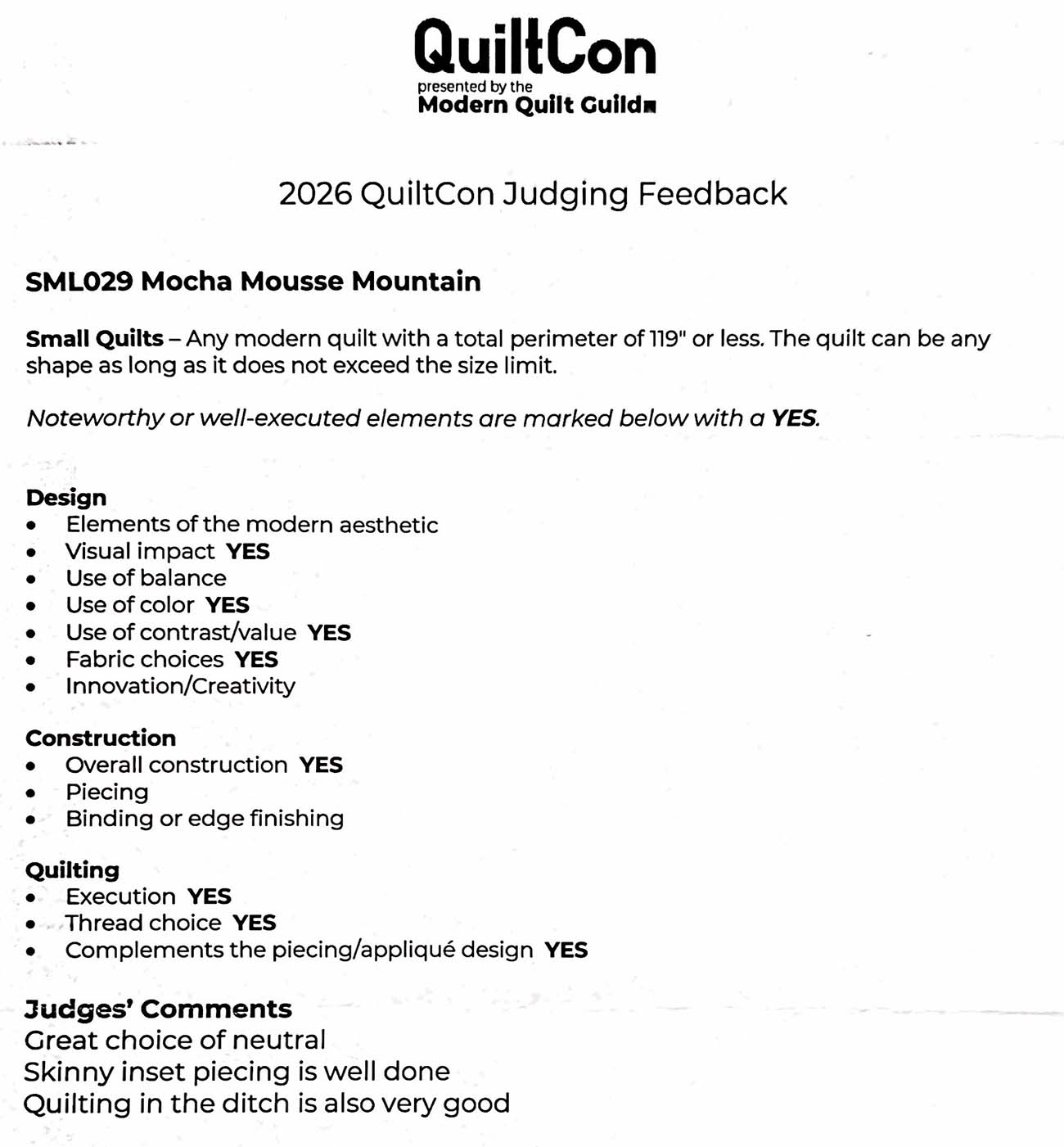
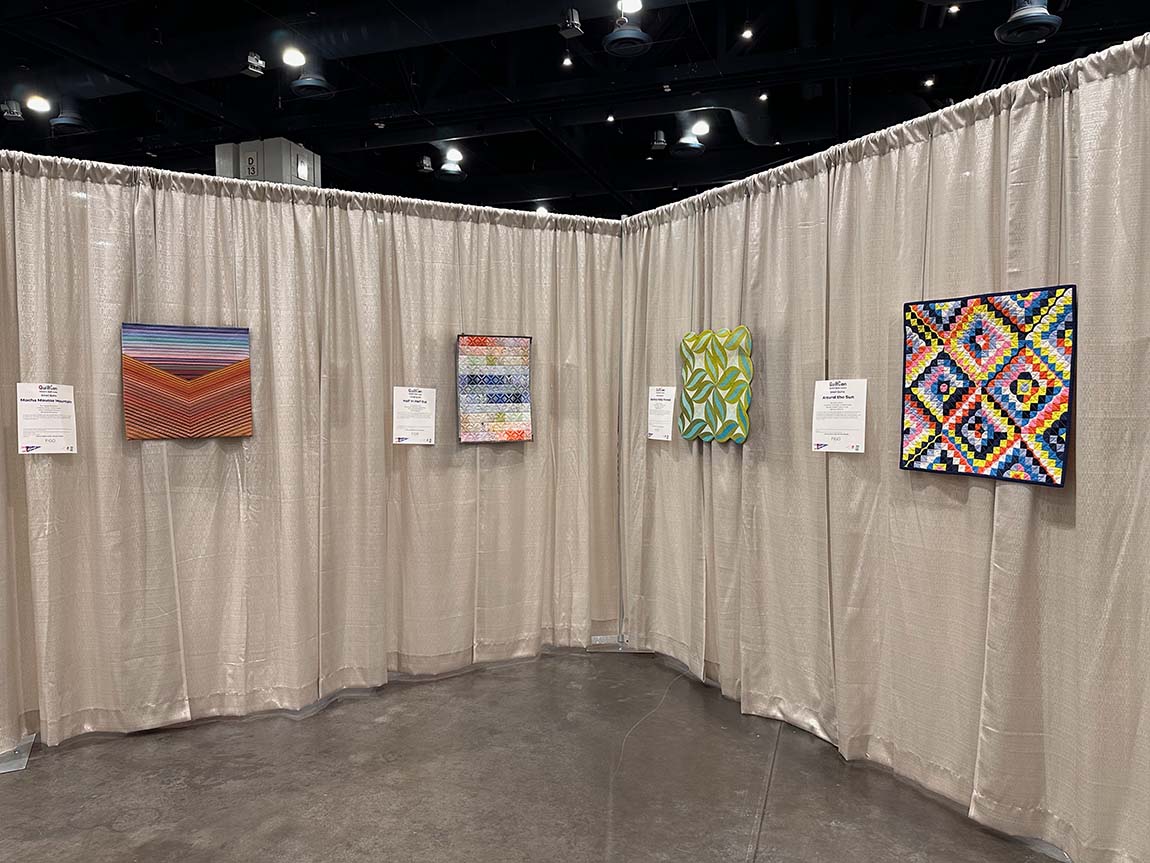
Mocha Mousse Mountain
Size: 20” x 20”
Note: This quilt sold at QuiltCon 2026

Category: Small Quilts
Quilts must have a total perimeter of 119” or smaller. The quilt can be any shape.
Why I Selected This Category:
This category was easy- outside of specialty categories (challenges, group quilts, etc), size dictates if a quilt needs to be in the small quilt category.
Quilt Description:
At a scenic overlook in Eastern Utah, you can see where the desert’s red rock begins to merge with the Rocky Mountains. This abstract mini quilt incorporates the 2025 Pantone Color of the Year, Mocha Mousse, with vibrant colors to evoke the hues of the desert formations.
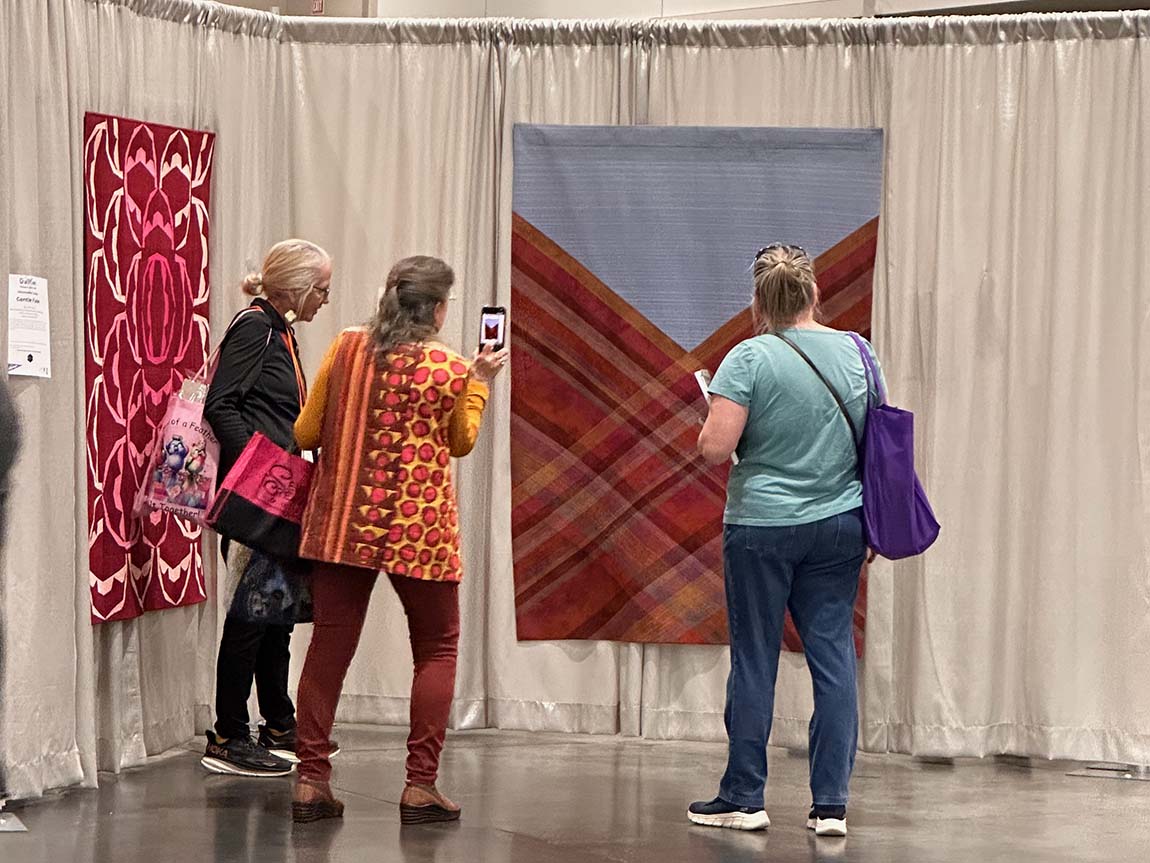
Utah Overlook
Size: 50” x 68”
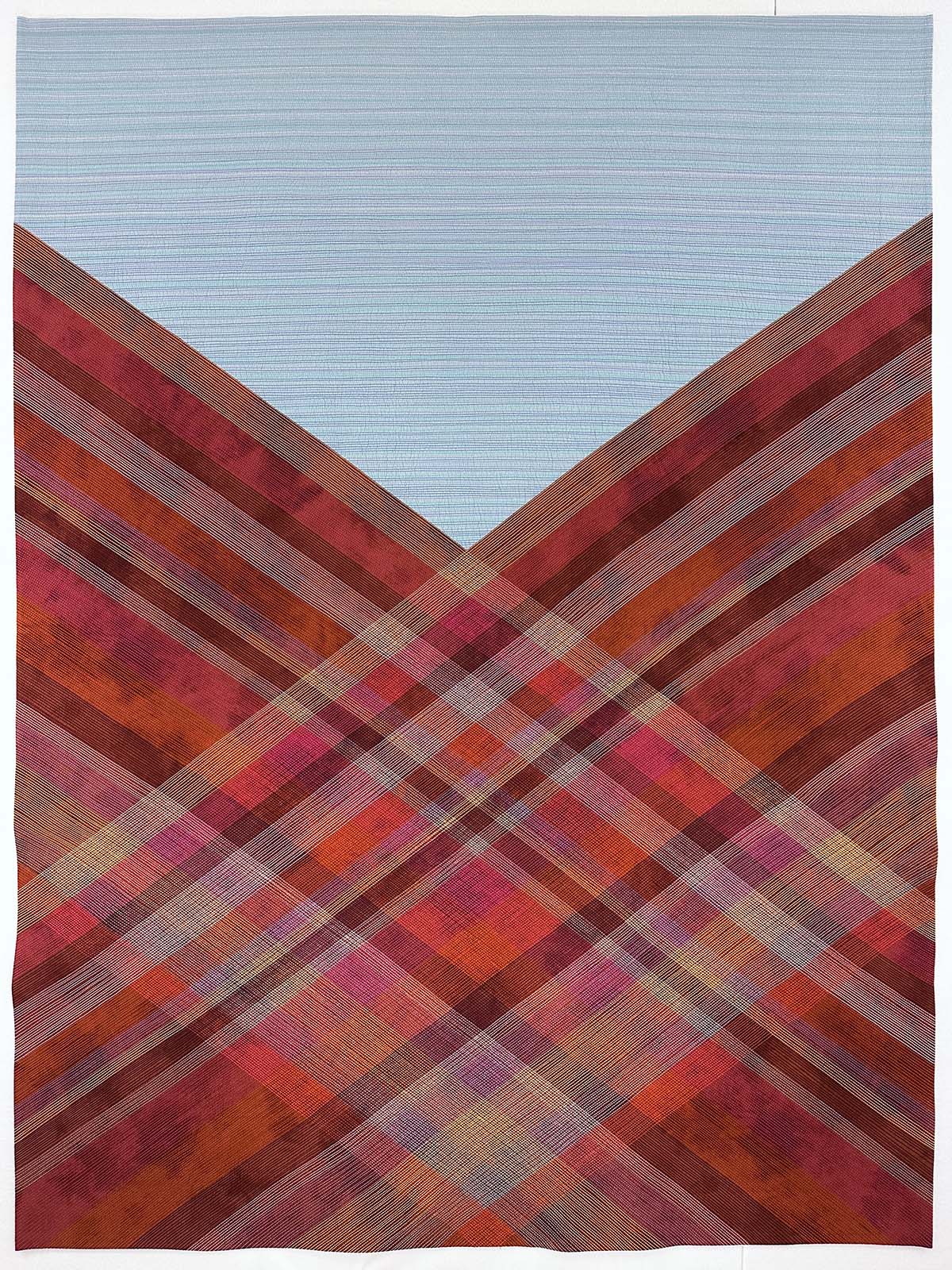
Category: Minimalism
Quilts must demonstrate simplification of content and form for maximum visual impact.
Why I Selected This Category:
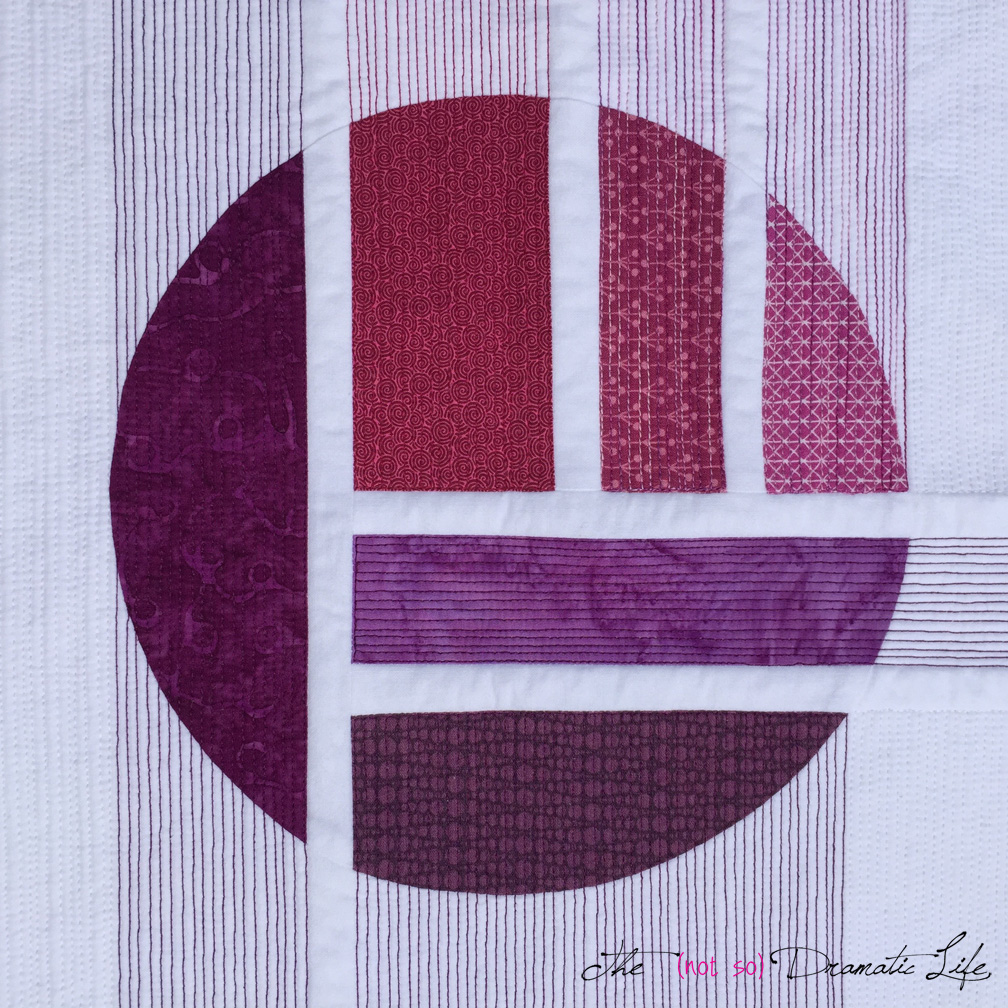
This quilt is constructed from two fabrics and features straight-line quilting. These simple components lend themselves to a minimalist design.
Quilt Description:
When you look closely at the red rock formations rising from the Utah desert, you notice dozens of colors infused into the landscape. In this abstract interpretation, a scenic overlook thread imbues color into a vast field of brown fabric.

My Thoughts On the Judging Comments:
I’m thrilled that the judges liked the fabric choices. I have made many plaid quilts using this technique, but this is the first time I have used a print for one of the fabrics.
I’m not surprised that they commented on the not-quite-flat edges. I ended the quilt blocking process a few hours earlier than usual this time, and it must not have been completely dry, even though it was dry to the touch, which caused the quilt to distort slightly as the drying process finished.
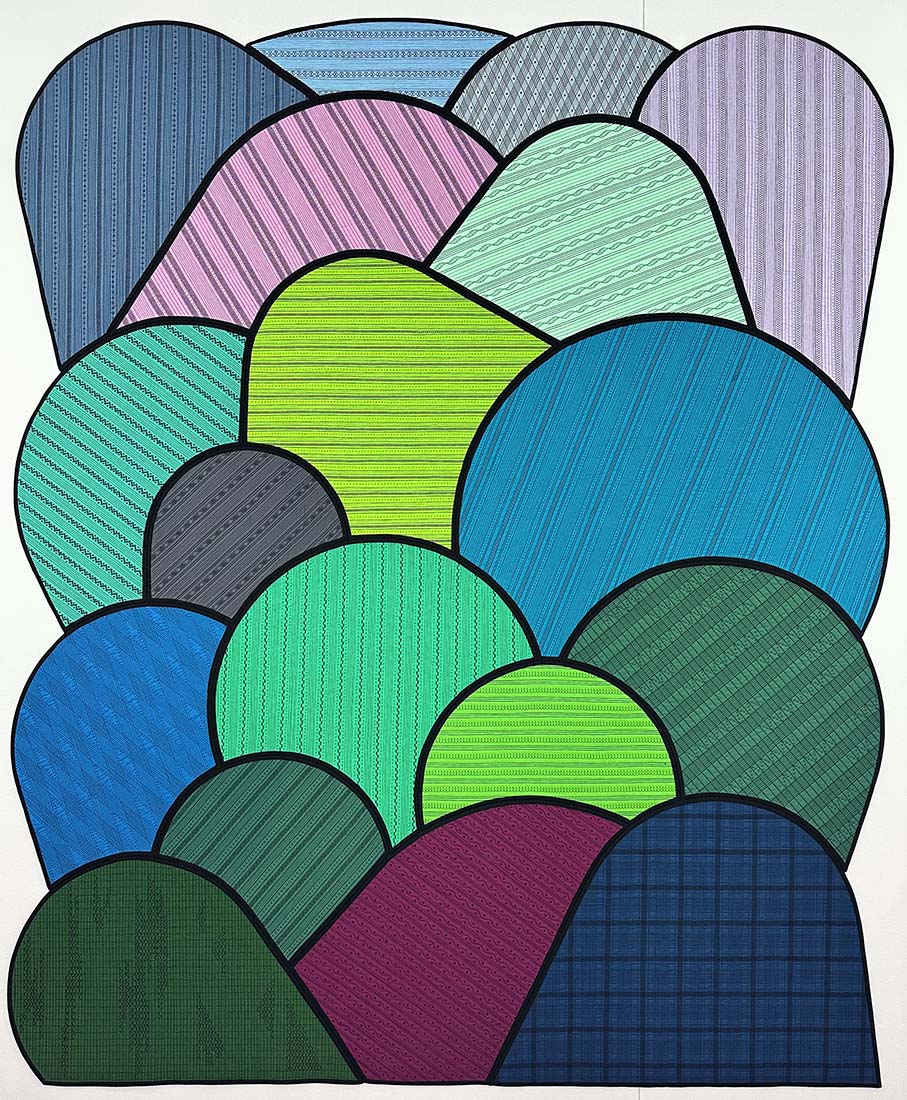
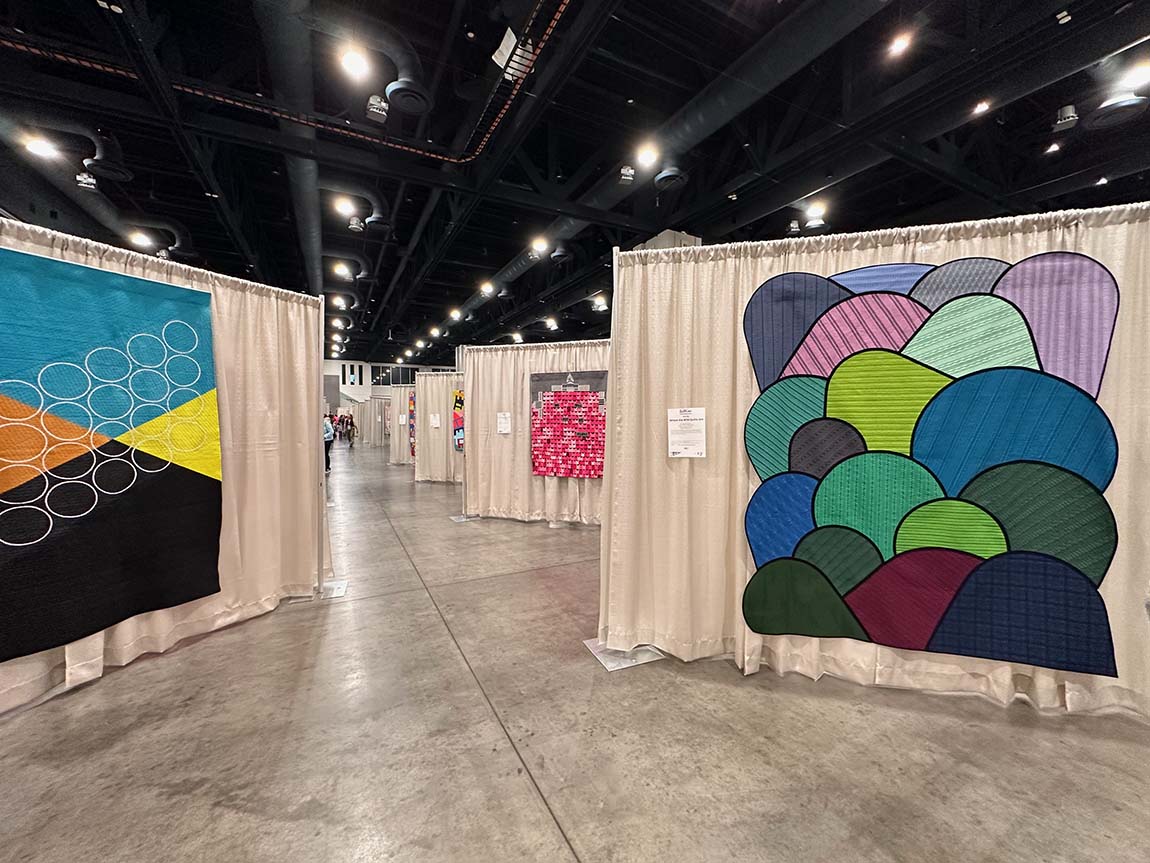
Where the Wild Quilts Are
Size: 65” x 79”
Category: Piecing
Quilts must be machine pieced and reflect a strong or innovative use of piecing.
Why I Selected This Category:
I flipped the design process upside down with this quilt: quilting and binding the components first, then piecing them together as the final step.
Quilt Description
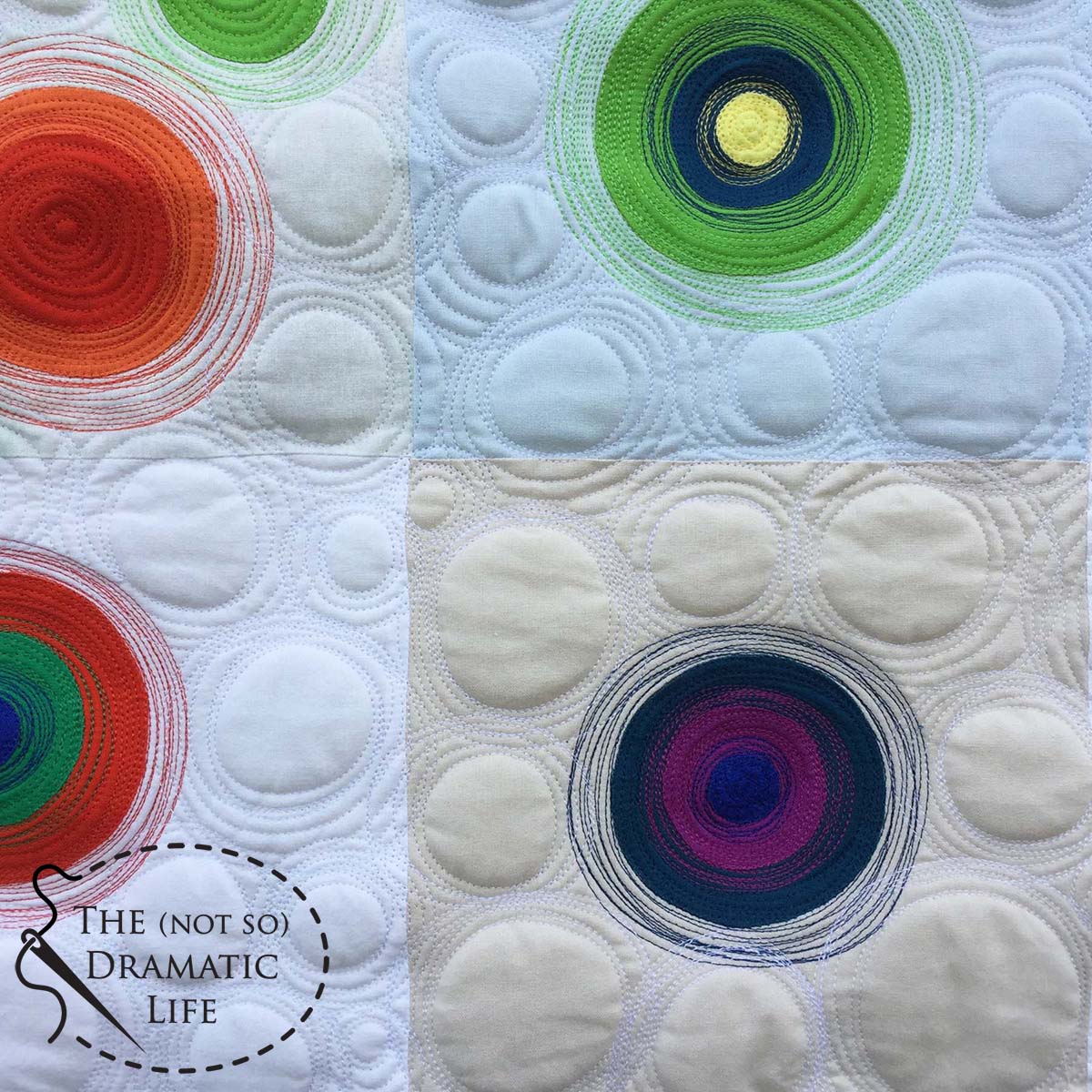
When driving through New England, I loved seeing the dome-shaped individual trees interlocking along the hillsides, resembling a wild version of a clamshell quilt. Eighteen whole-cloth mini quilts are joined into a single quilt using a potholder quilt technique, where each individual component is quilted and bound as its own entity before being combined into a larger quilt.
My Thoughts On the Judging Comments:
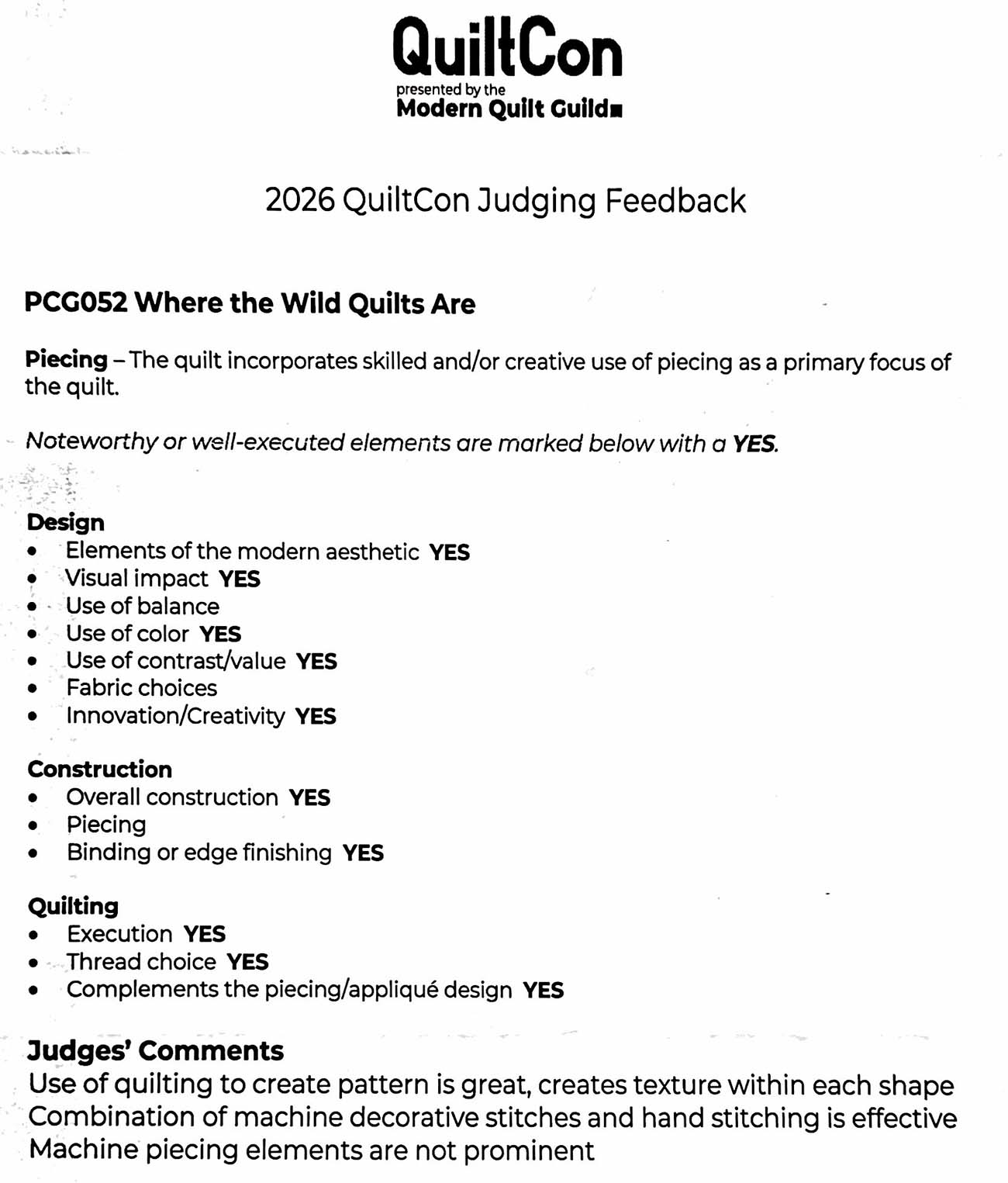
The judges seemed to get what I was going for by using quilting to create texture and pattern. However, I’m very disappointed that the judges didn’t understand what I was going for with this category placement. I thought piecing a quilt after quilting and binding was innovative in relation to how quilts are typically constructed, but it sounds like this group of judges didn’t recognize it as pieced at all.
Would You Like to See More?
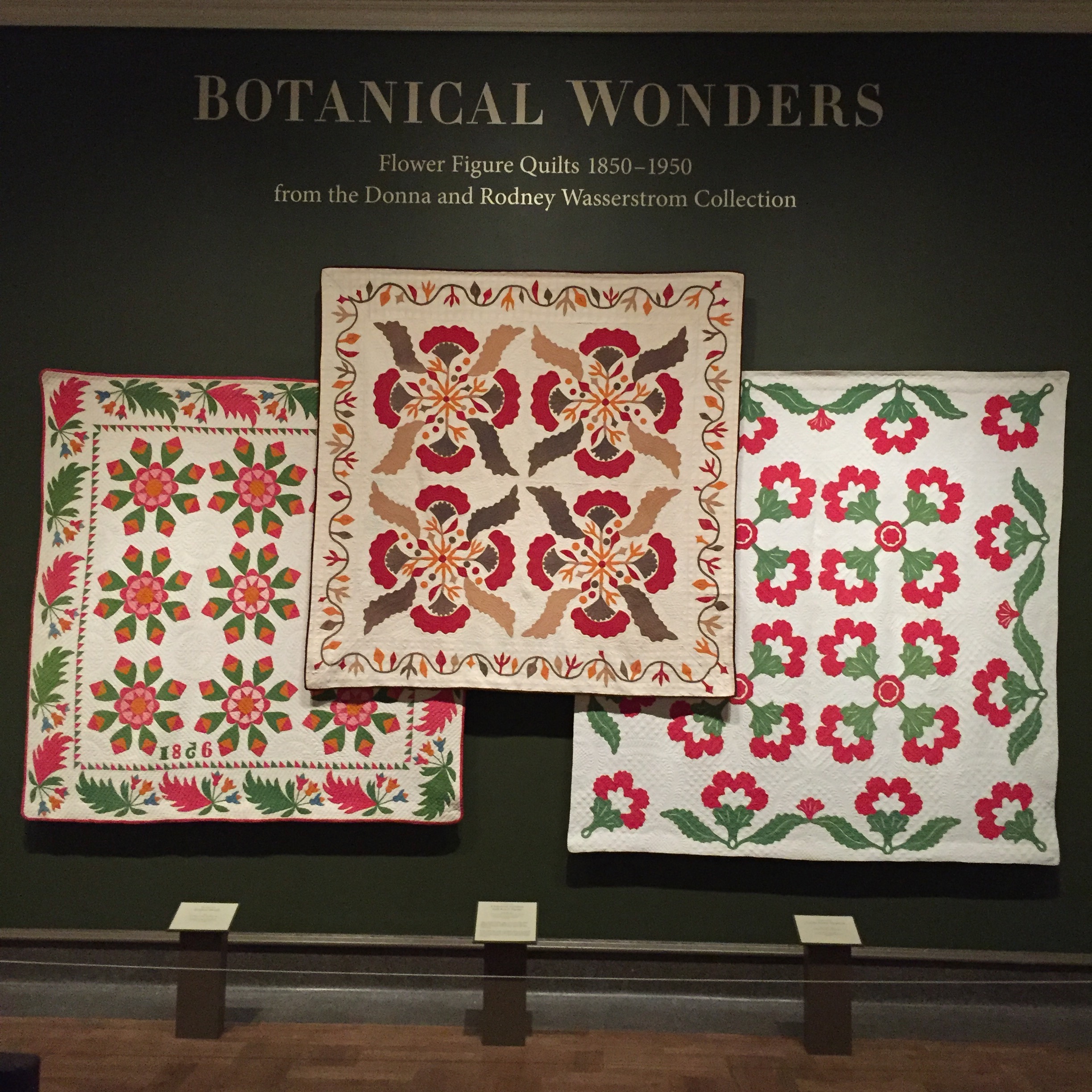
If you would like to see more QuiltCon judging examples, check out these posts:

4 Comments
Susan S Geraci
February 27, 2026 at 7:47 amLove your work and these blogs. Congratulations on your extraordinary accomplishments! I’m curious as to what the back of your Where the Wild Quilts Are looks like before you add the batting and backing. I’m wondering how the pieces fit together and if there is any “overlap” among the pieces.
Kathie
February 27, 2026 at 8:08 amAlas, art is always open to interpretation. Hindsight being 20 20, perhaps if you had piecing in each individual “tree top” they would have understood your intention. I love that your quilting creates the visual pattern in each of the pieces. Don’t let them discourage you. Your work is an inspiration!
Heather Kinion
February 27, 2026 at 9:33 amI don’t remember, even though I looked closely at it, were the segments stitched together with a sewing machine?
If yes, maybe good job on doing it so subtly that they didn’t recognize it as piecing. If no, the specifically stated machine piecing (and the category states machine piecing) so maybe they were trying to communicate to you that they felt it fell somewhat out of the category’s briefing.
Sarah
February 27, 2026 at 10:46 amOk, it’s super interesting to think about whether to consider Where the Wild Quilts Are as pieced or not!! I had to go back and refresh myself on what the definition of the category is: “Quilts must be machine pieced and reflect a strong or innovative use of piecing.” So it does reference machine piecing specifically, which I think *technically* you didn’t do here? I wonder if that drove the comment.
But it does feel like a bit of a technicality, and this quilt plays with the idea of what piecing really is in an interesting way. I’m glad it was juried in!