
I gather inspiration for my quilts from a wide range of sources, including nature, architecture, and aspects of daily life. However, I rarely use contemporary quilts as design inspiration- unless there is a challenge involved!
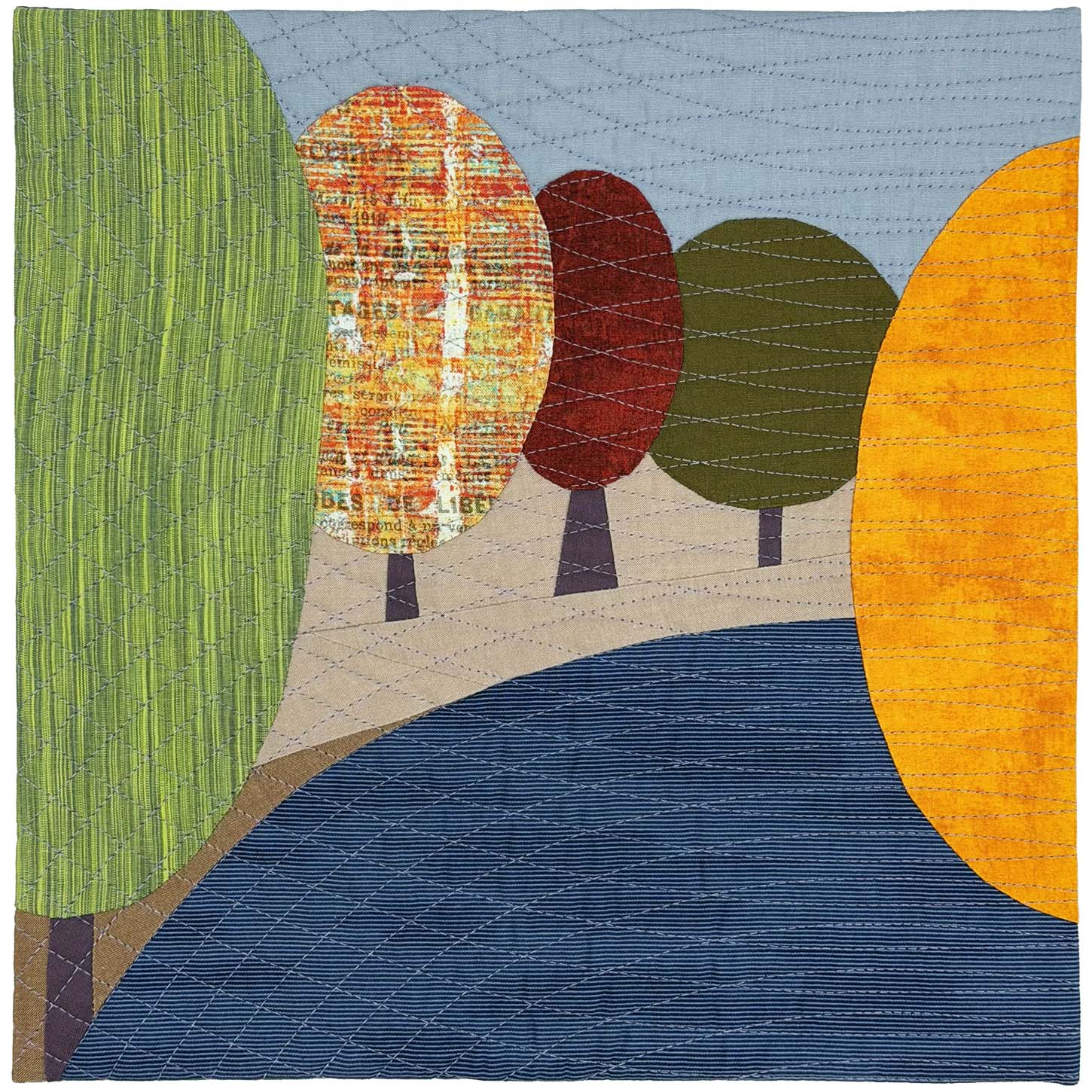
Last week, I shared the first quilt in my 2026 Telephone Tag series, which is a collaborative challenge I did with my regional SAQA group. Based on the game of telephone we played as children, this version is entirely visual rather than auditory. For the first quilt, we worked from another group member’s photograph to make a mini quilt, but all subsequent quilts are inspired by the mini quilts made by the person before us in the rotation.
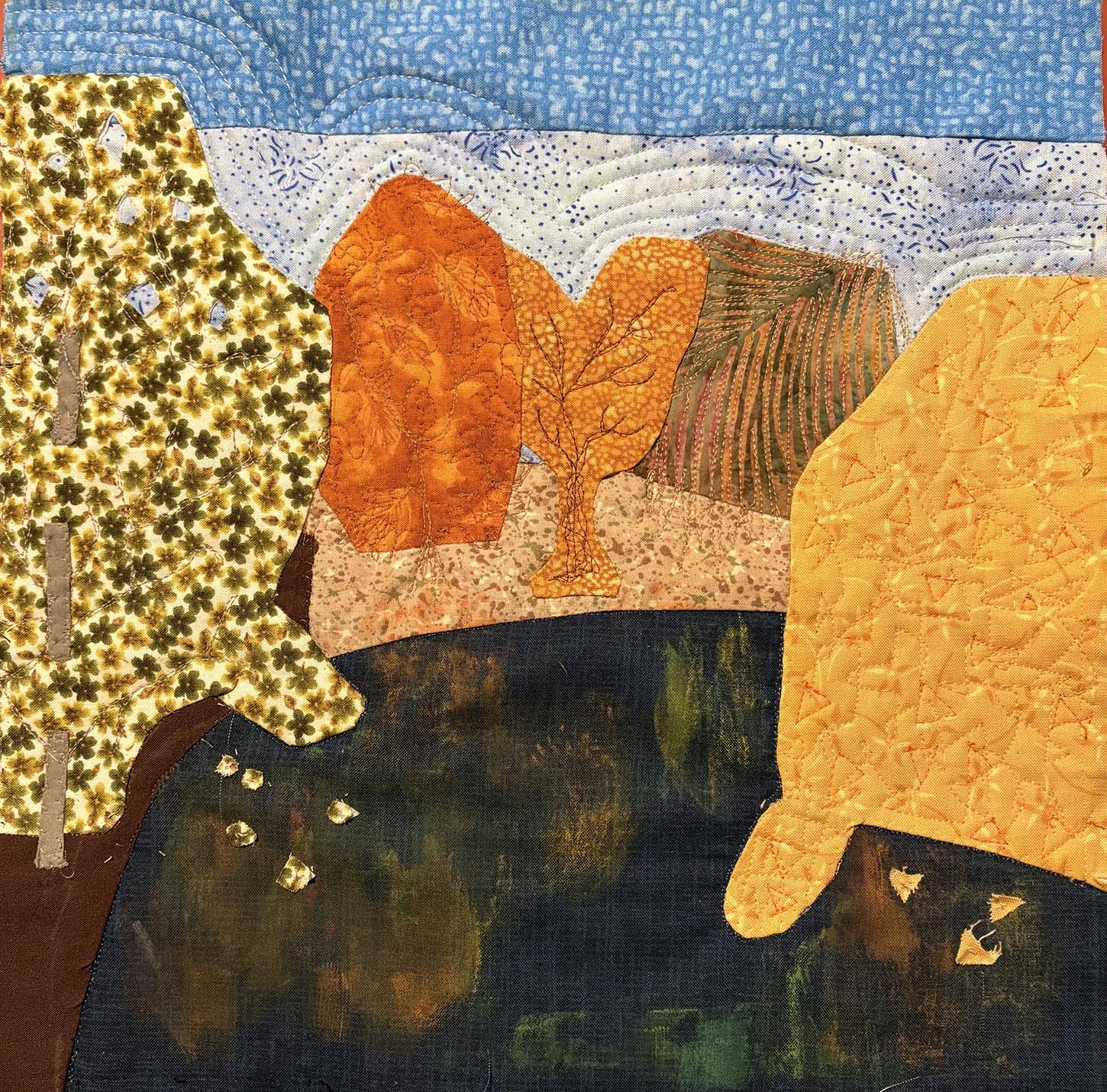
The Inspiration Quilt
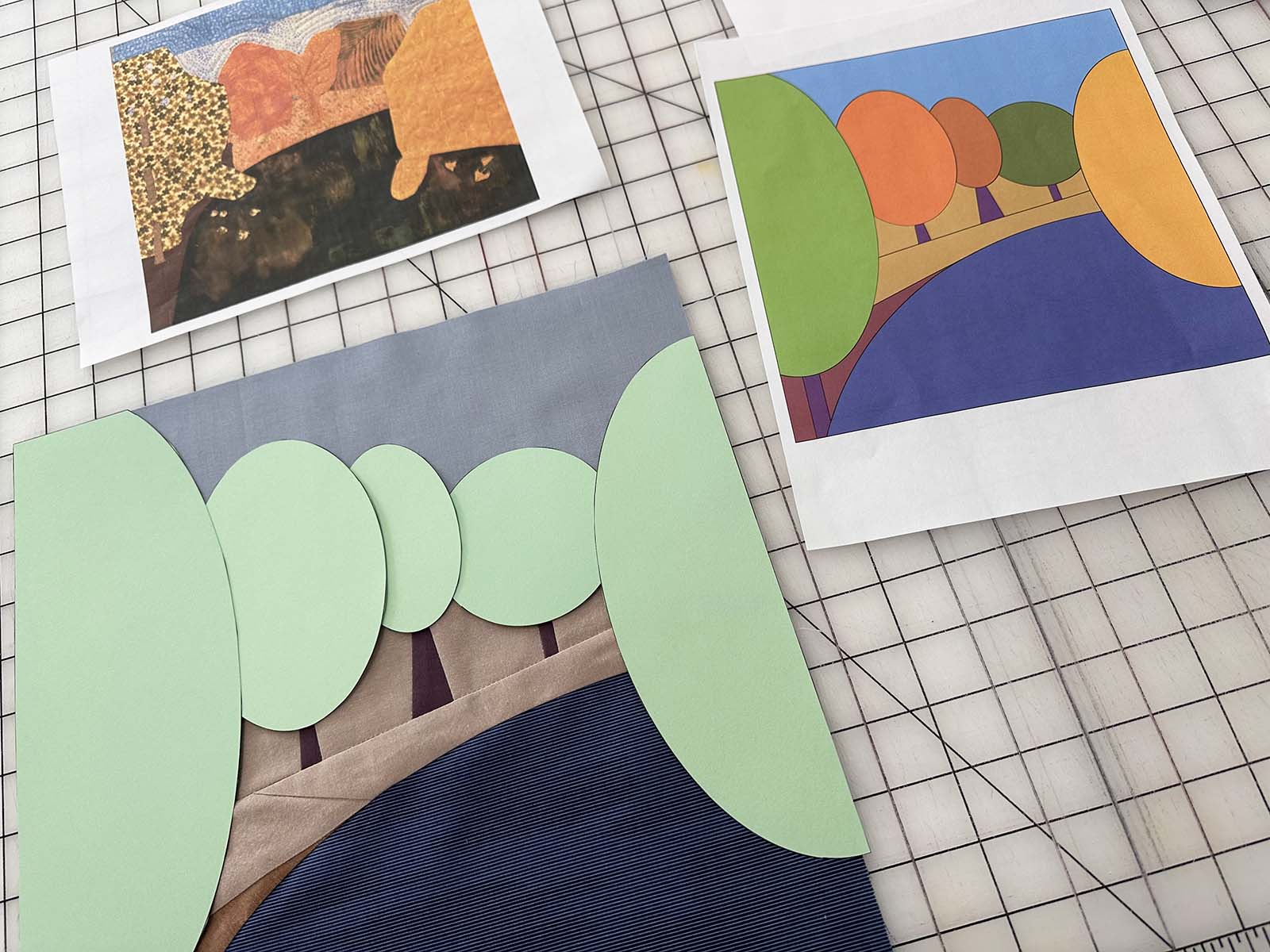
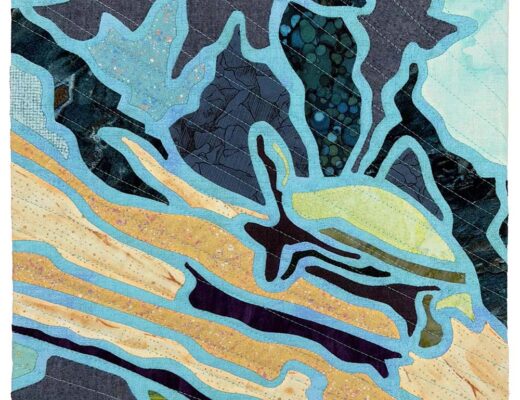
For this project, we all started with nature photos, and the mini quilt I received for my second quilt reminded me of trees surrounding a lake or pond. The background of the image seemed to have three distinct areas:
- Water with reflections towards the bottom of the composition
- Land in the middle of the composition
- Sky at the top of the composition
The organic shapes arcing through the center of the composition felt like Autumnal trees with size implying their distance from the viewer.
My Design
I decided to focus on three key elements from the inspiration quilt to create my composition:
- The background with water, land, and sky
- A sense of space that is created through the tree placement
- Echo quilting emphasizes the shapes in the composition.
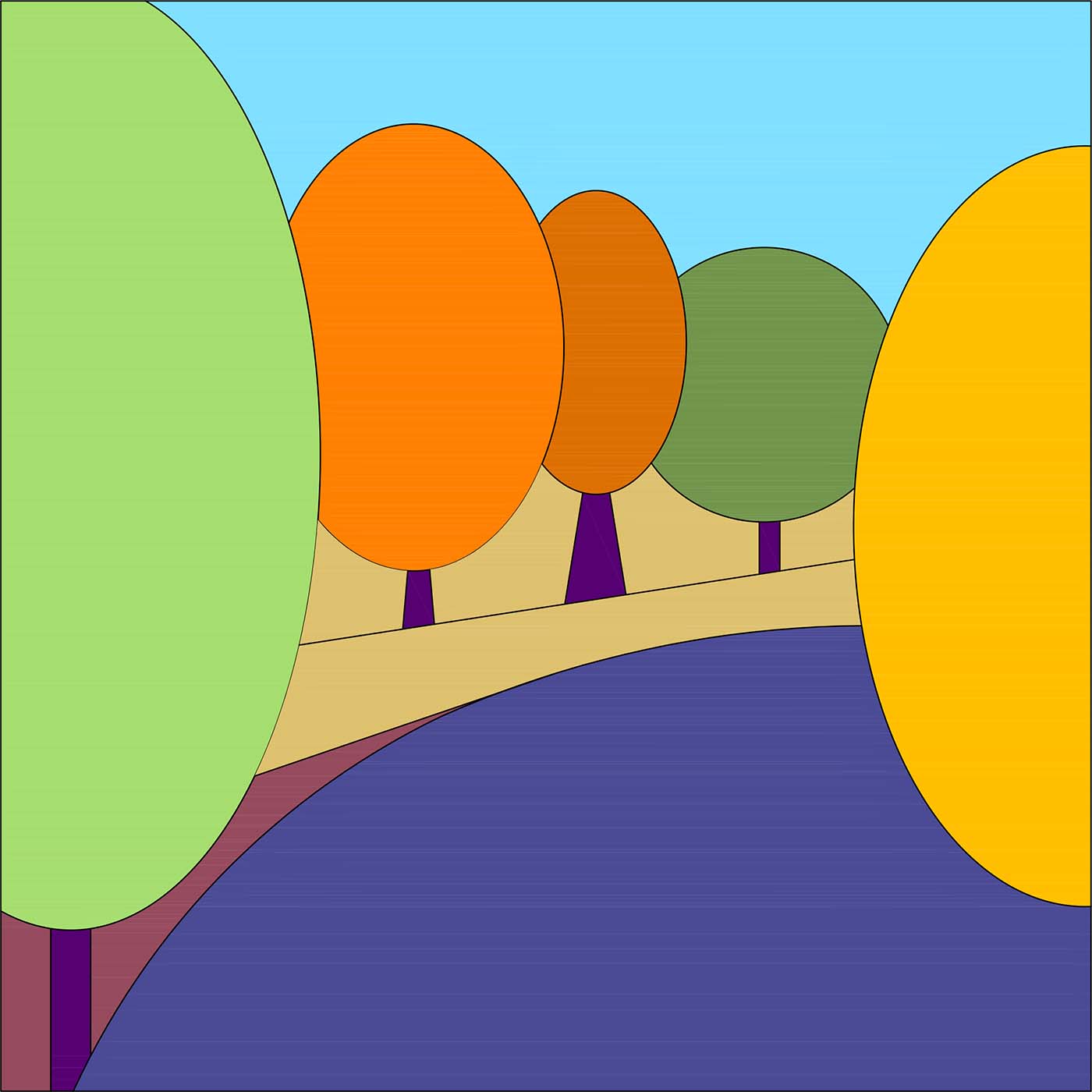
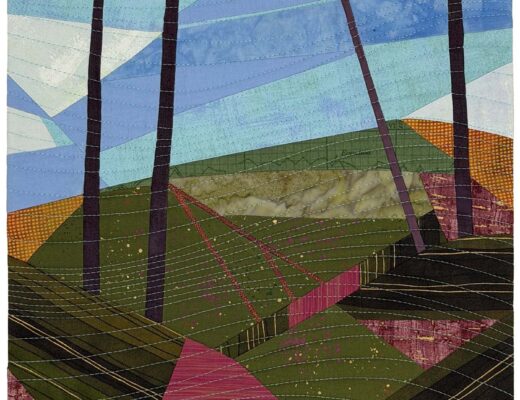
My interpretation of the composition is more graphic than the inspiration quilt, with a foundation paper-pieced background and hand-appliquéd oval-shaped tree tops. I experimented a lot with the exact size and proportions of the tree tops because I wanted them to emphasize a sense of depth in the composition.
Since this composition uses a mix of techniques, I drafted the design in AutoCAD LT, which allowed me to develop both the foundation paper-pieced templates and the templates for the appliqué oval tree tops. Color placement in AutoCAD isn’t super accurate (without a lot of extra effort), so I just gave myself a general idea, knowing the real color would come into play with the fabric pull.
The Fabric Pull
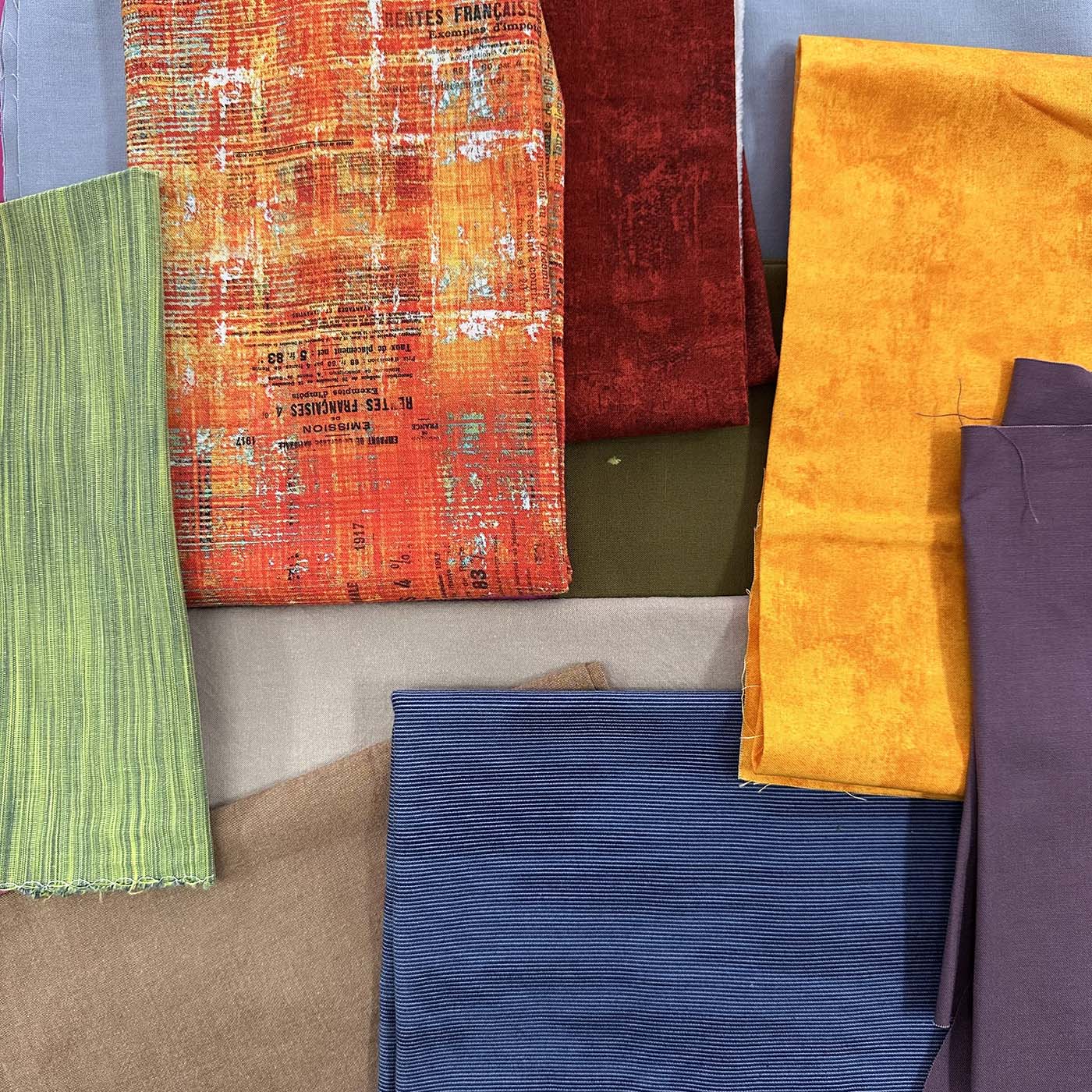
The simple shapes in my composition allowed me to heighten the color palette visually. When shapes are simplified, we often expect brighter colors, like in comic or children’s book illustration, and I used that expectation to my advantage for this design.
The source quilt used primarily prints in the design, and I wanted to continue that aesthetic, along with a few solids to visually push the background elements back in the composition and highlight the prints in the water and tree tops. One of the trees in the source image had a bold print, while the others employed tone-on-tone designs. I decided to maintain that aspect of the design, but shifted the bold print one tree over.
Constructing the Quilt Top
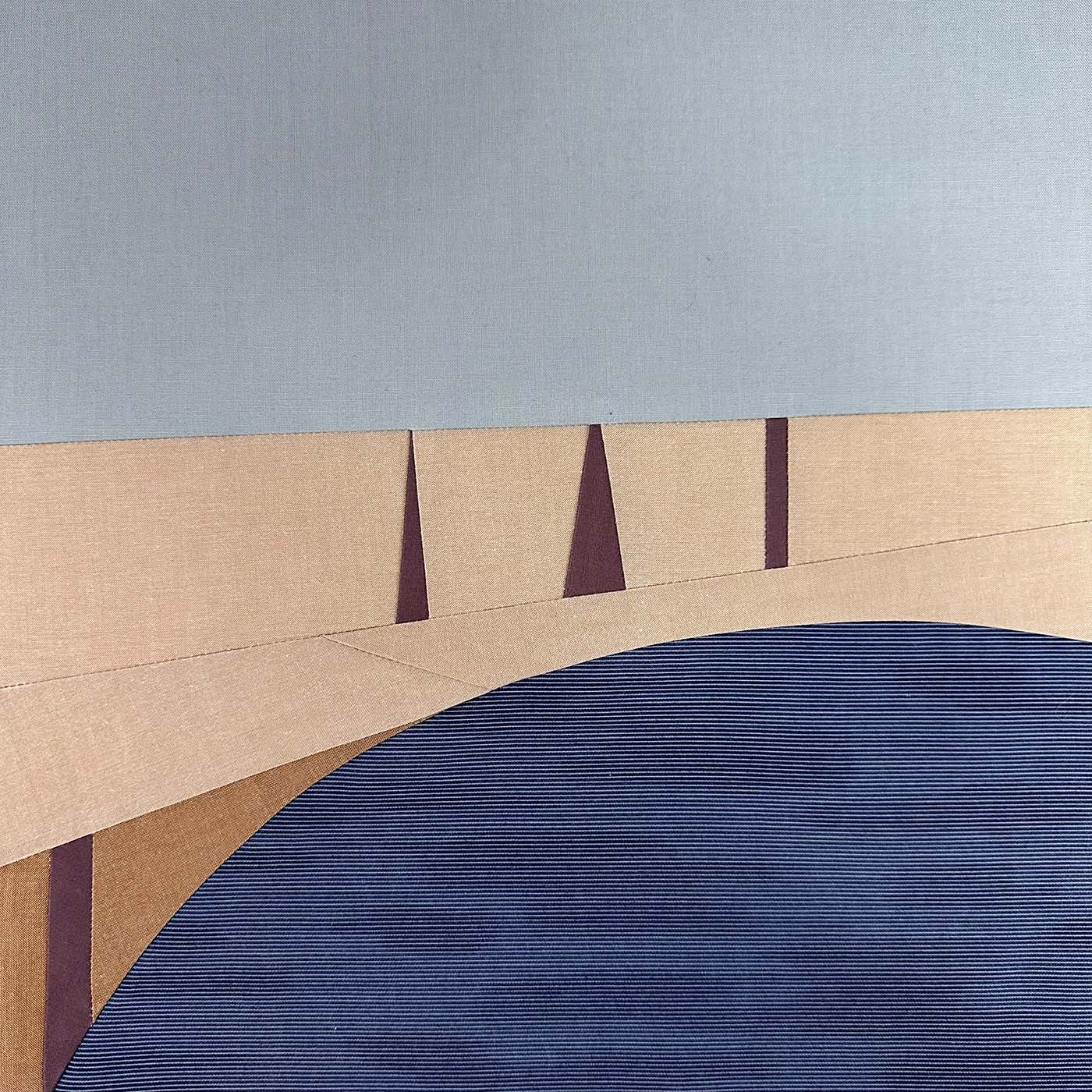
The background with water, land, and sky is foundation paper pieced (FPP), including the placement of the tree trunks, and then finished with the curved seam to add the water element.
I printed the tree top shapes on cardstock to use as templates. Before moving forward with the fabric components, I positioned the shapes on the background to observe their interaction with each other in the physical space.
The Appliqué Process
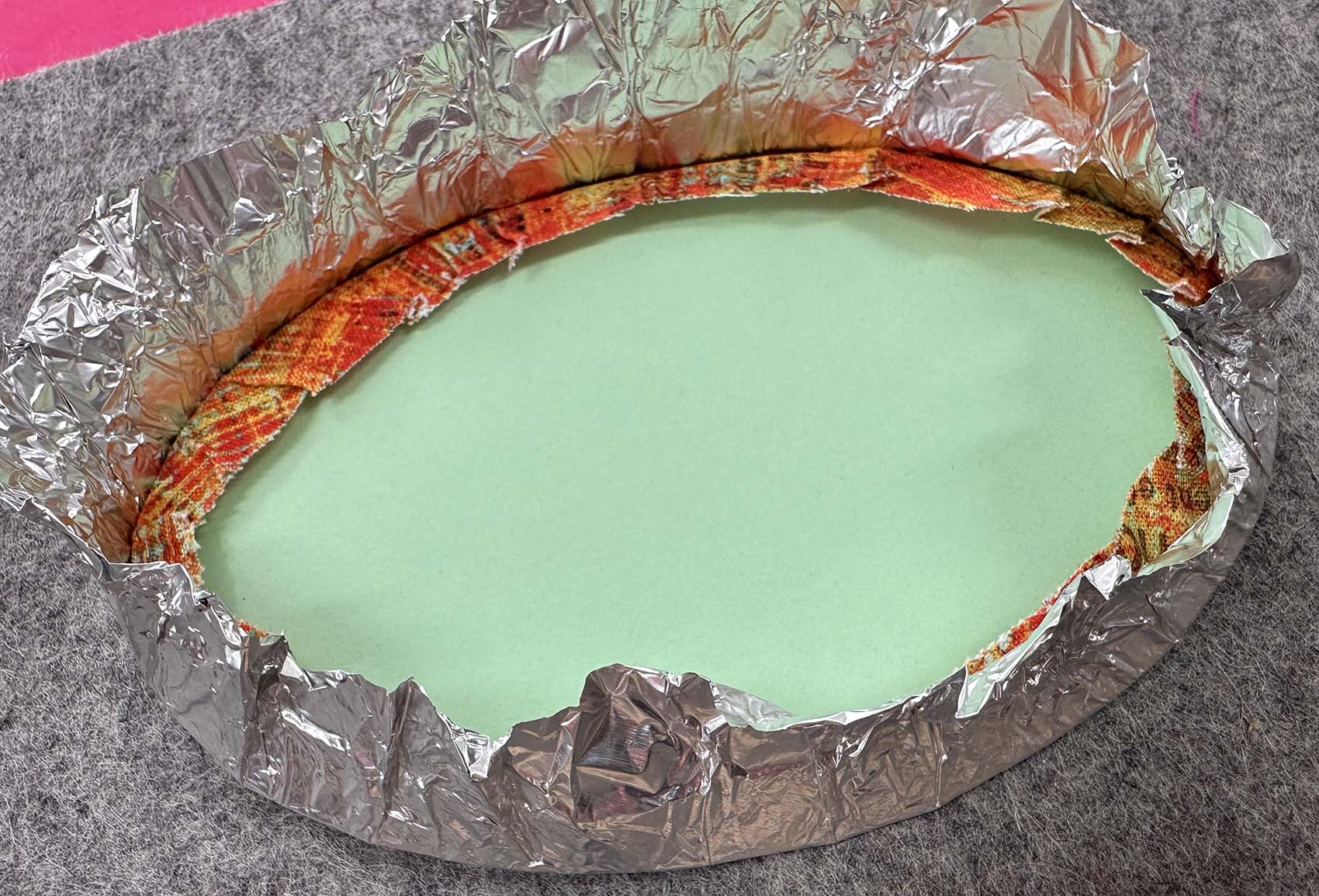
For these oval and partial-oval shapes, I decided to use an aluminum foil technique to prepare the pieces. To do this, you cut the fabric about 1/2” larger than the template on all sides. It isn’t necessary to be super accurate at this point. You then cut a piece of foil a little larger than the fabric.
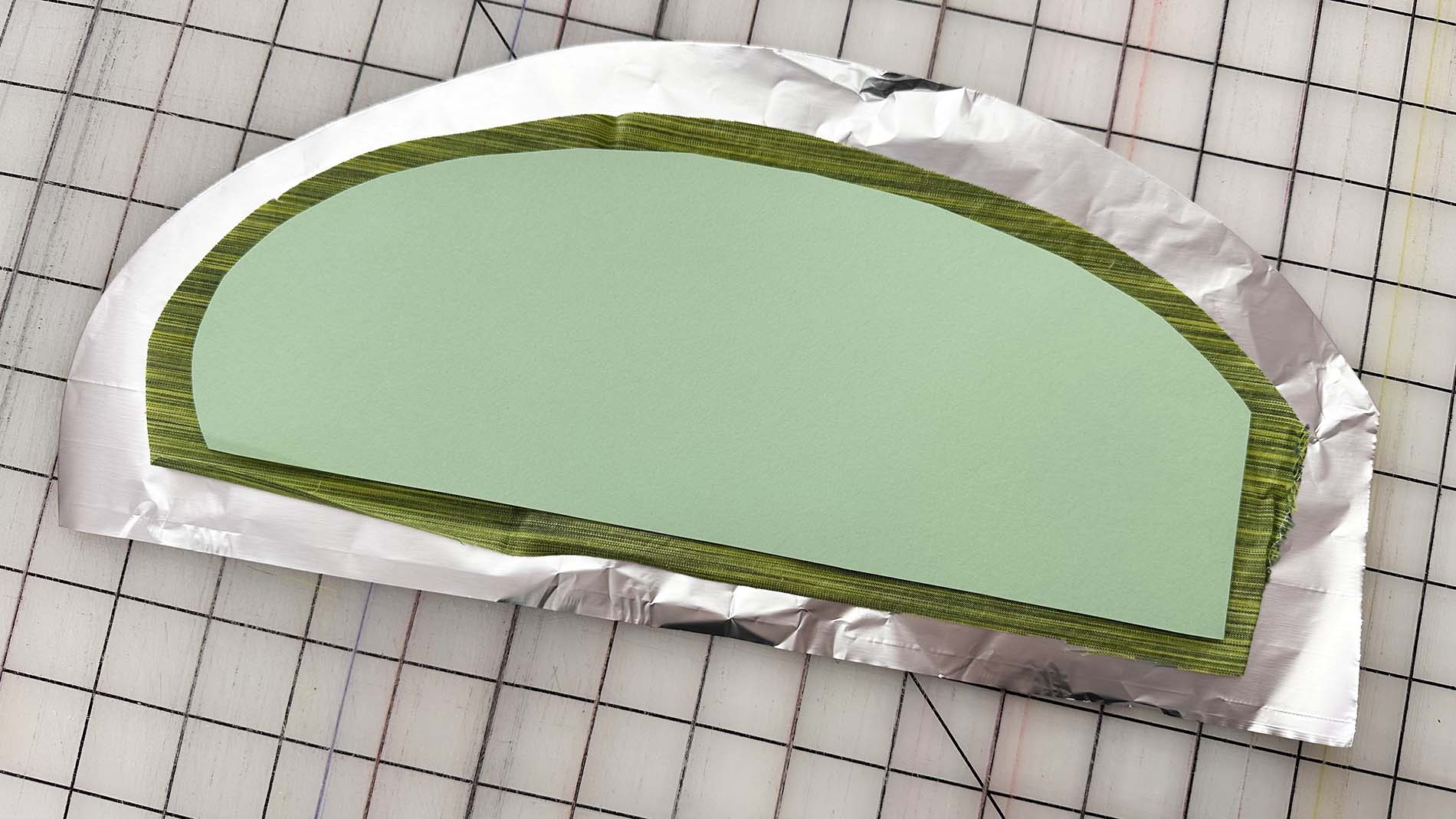
You use the foil to push the fabric edges around the cardstock template, then you press the fabric and foil in place.
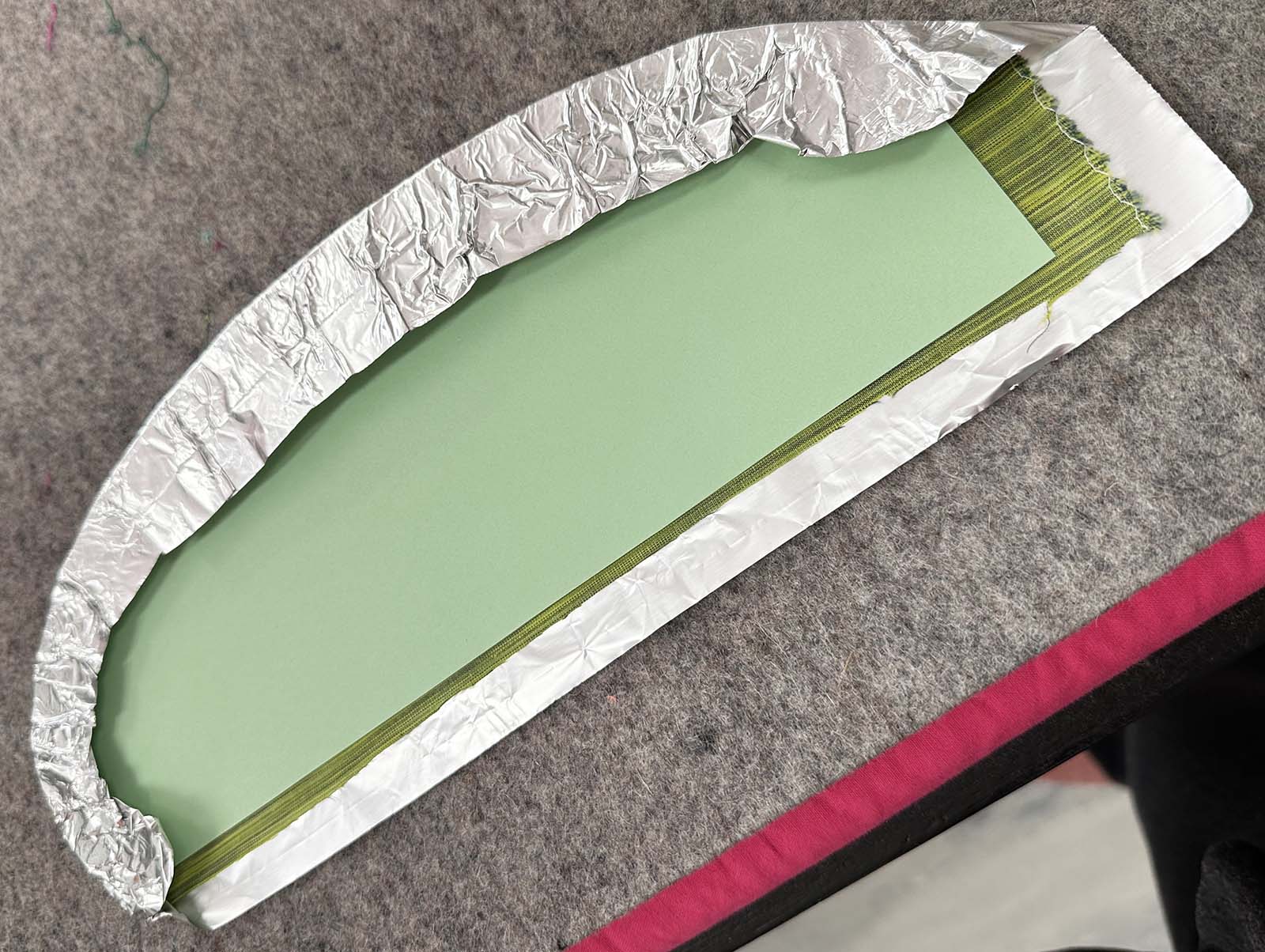
This method worked well on pieces with a mix of edges that needed to be turned back and those that remained flat, extending to the edges of the quilt top. It also worked reasonably well on pieces with all of the edges turned under, but methods using a basting stitch to cinch the fabric edges around the template yield a smoother edge with less effort.
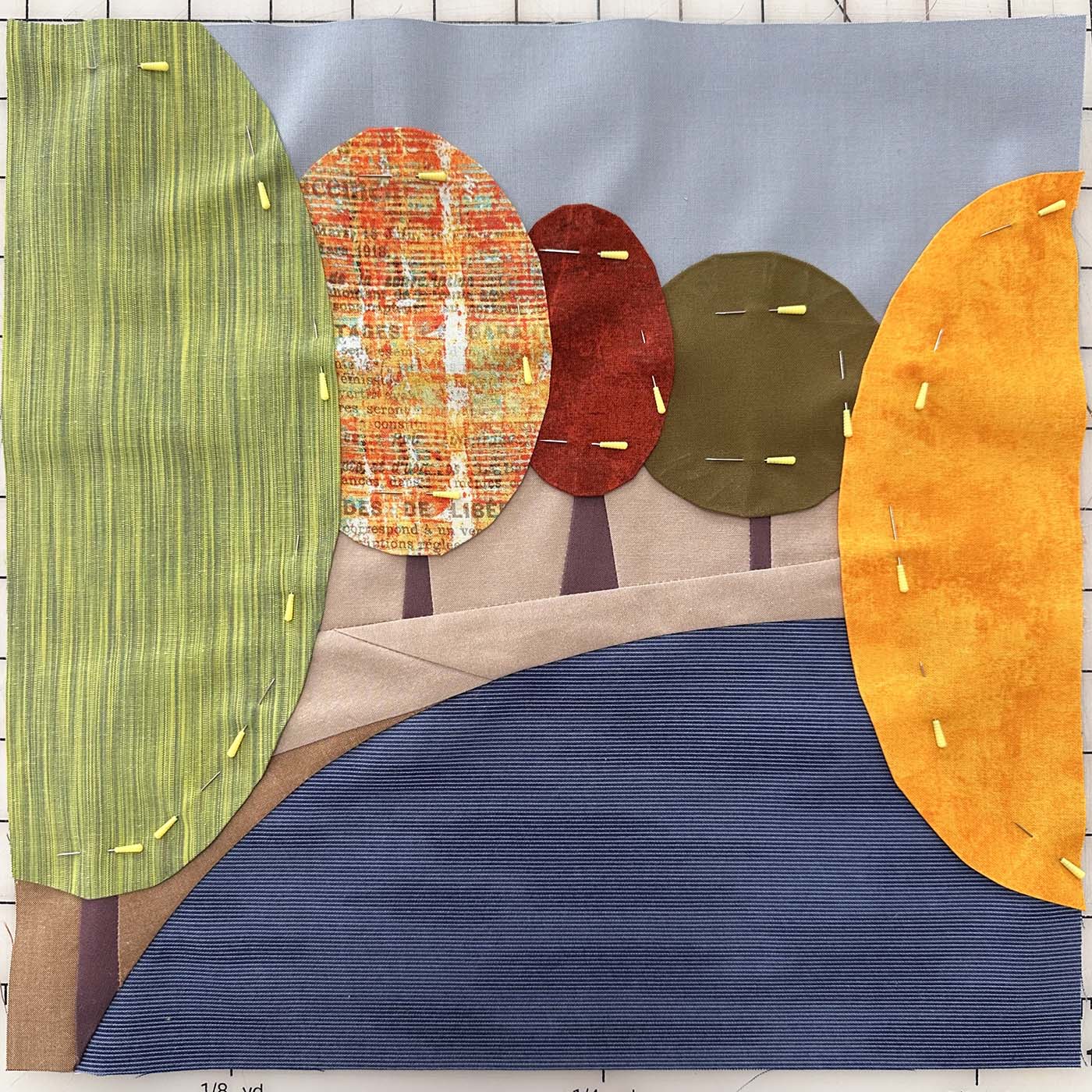
With all of the pieces prepared, I pinned the components in place to appliqué the final design.
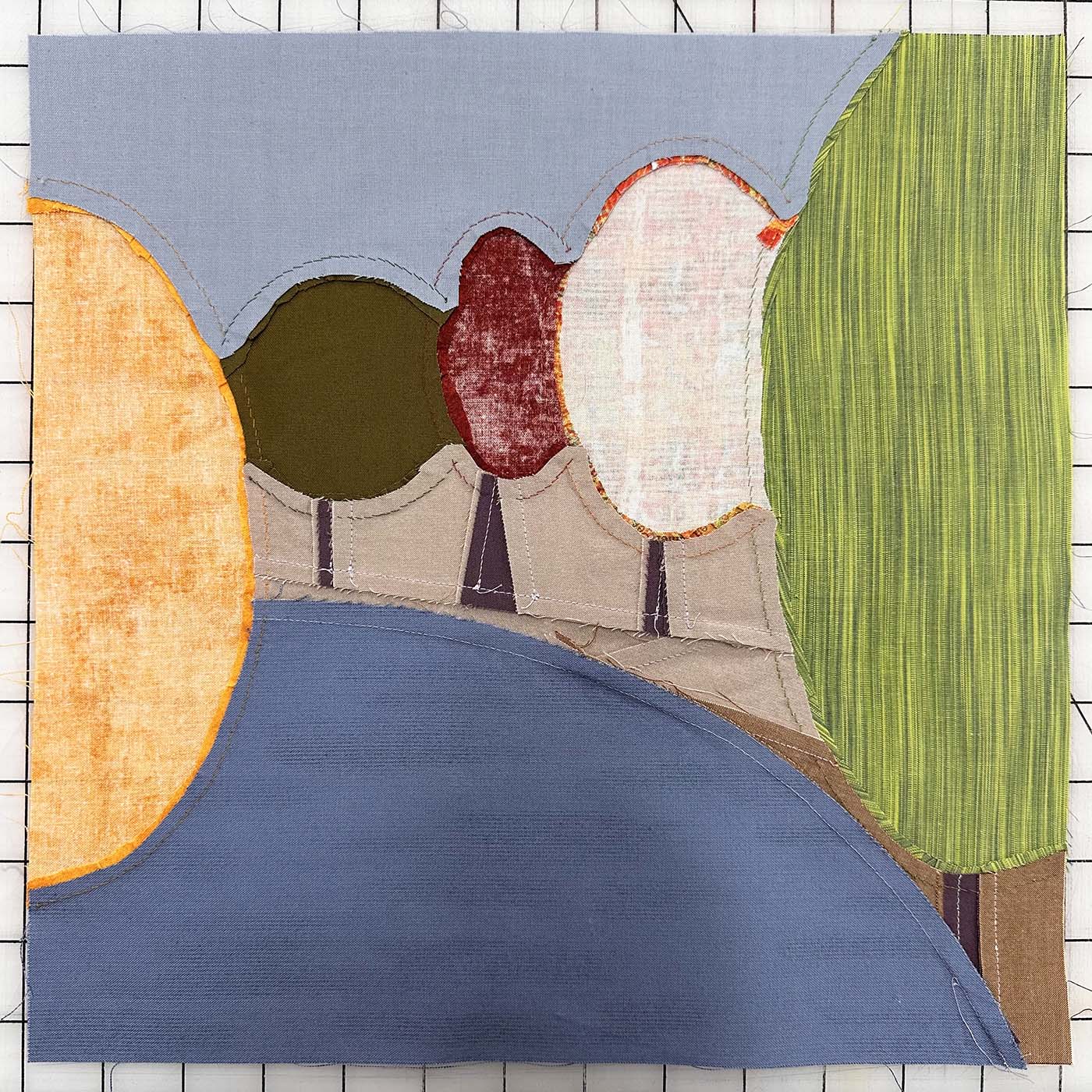
Once the hand appliqué was complete, I trimmed the background fabric and the excess seam allowance turned under on the tree tops.
Quilting
I liked the idea of using echo quilting on this design, but instead of echoing the tree tops, I decided to echo the edge of the water across the entire quilt and mirror that same shape to create a gridded motif that evolves as it moves across the quilt.
Edge Finish
This design breaks the quilt’s edge, so I decided to avoid the visual border of binding and went with a faced edge instead.
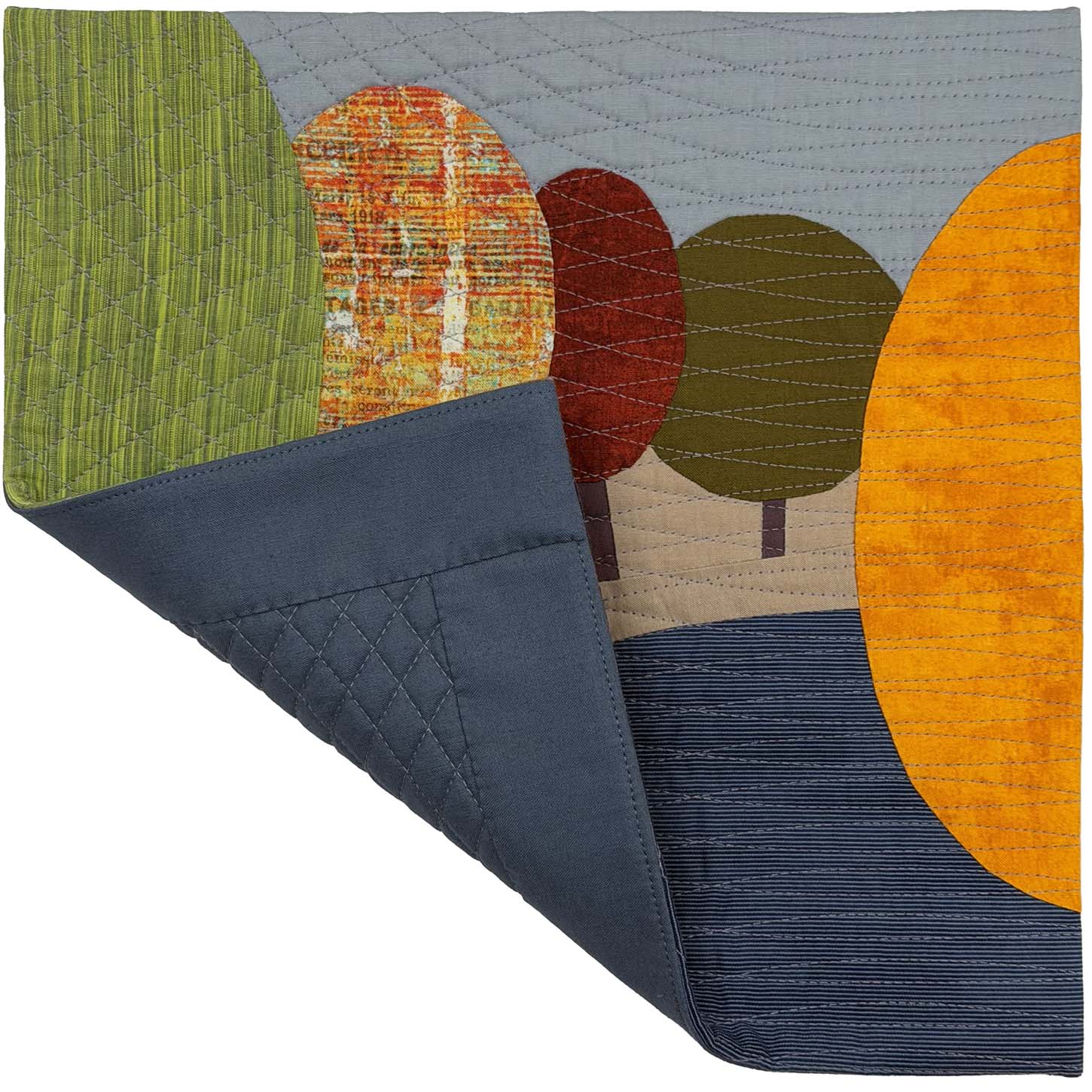
Quilt Stats:
- Title: Lakeside
- Size: 12” x 12”
- Techniques: Foundation paper piecing, curved piecing, hand needle-turn appliqué
- Quilting: Walking foot quilting on a BERNINA 770 QE PLUS
- Fabric: Assorted print and solid fabrics from my stash
- Batting: A scrap of Hobbs 80/20 Cotton/Wool blend
- Thread: 50-weight Aurifil in a variety of colors
- Edge Finish: Facing
3 Comments
Kathie
July 24, 2026 at 7:49 amThanks for sharing your creative process. I love the cartoonish feel of this quilt. It would make a wonderful background in a children’s book. The foil technique is amazing!!!
lynn
July 24, 2026 at 9:16 amI enjoyed this post Cassandra, and thanks for the introduction to the use of foil in applique. I find the quilting you have used in this piece the perfect touch. This would have been a fun project
Fenny
July 24, 2026 at 10:20 amWhat a great introduction to the use of foil in quilting, thanks